
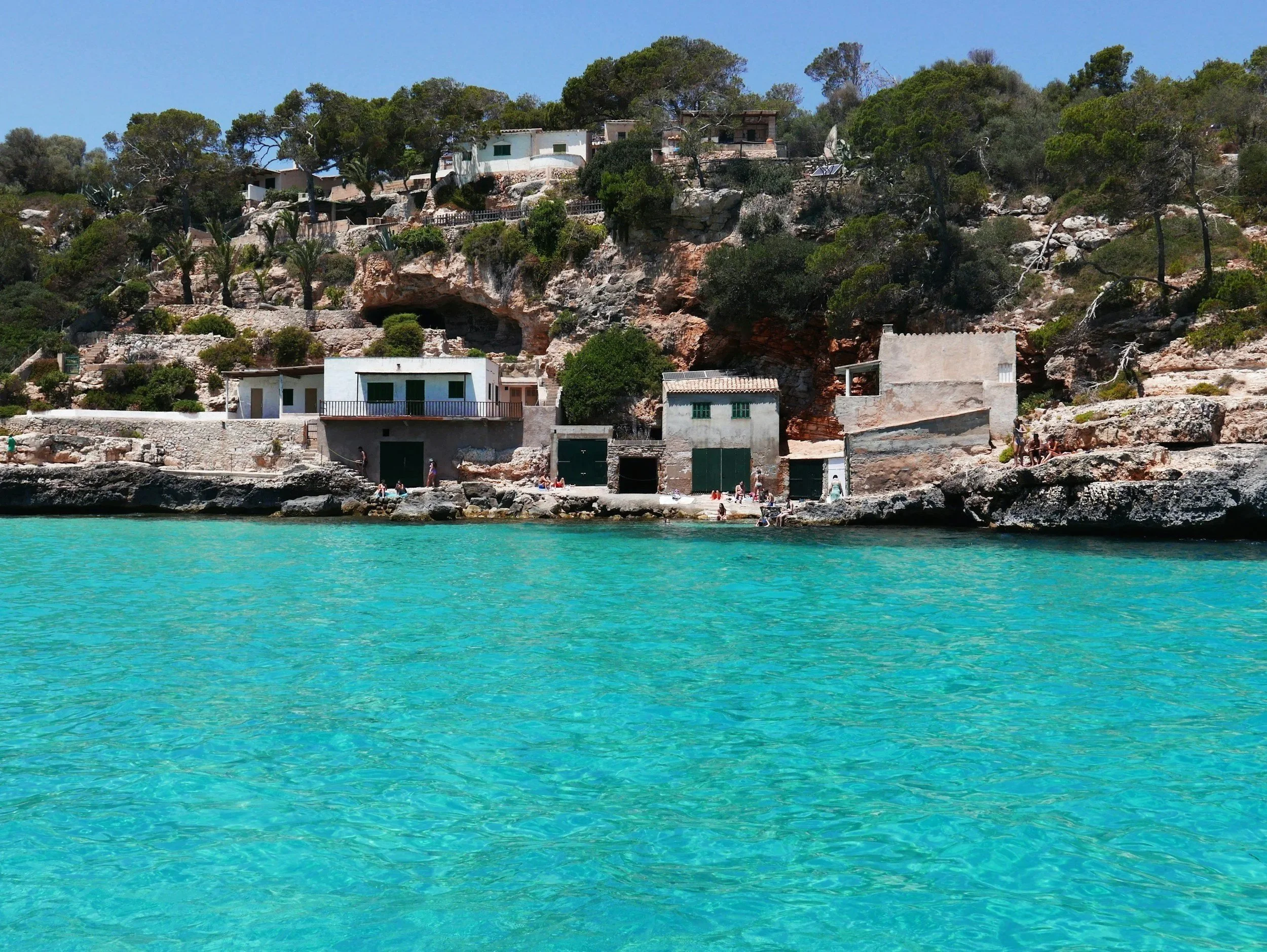
You Do Not Invest in Hotels. You Invest in the Brand That Makes the Place Matter
Why family offices and luxury operators are shifting from real estate to brand architecture. From her base in Bali, strategic advisor Marian Gomez analyzes how hospitality holdings across Asia, Europe, and the Americas convert premium destinations into structural value creation and pricing power.
Why family offices, holdings, and luxury operators are looking for assets where destination, reputation, and brand architecture work together.
The logic of luxury tourism has shifted. A beautiful destination is no longer enough. What converts a place into interest, interest into preference, and preference into pricing power is a brand capable of making that location matter to the right person, at the right moment, for reasons that go beyond geography.
For family offices, holdings, and luxury operators, the question has changed. It is no longer only where the asset is located. It is what brand makes it valuable and why someone would choose to go exactly there.
The Destination Is Not Enough
For decades, luxury hospitality operated on the assumption that location was the primary driver of value. A coastline, a mountain range, a historic city center. Location as moat. That assumption no longer holds.
A destination can have landscape, climate, and prestige and still fail to become preference. Without a brand capable of interpreting it, the place stays a postcard, and a postcard does not build preference, pricing power, or loyalty.
The high-net-worth traveler is not simply choosing Mallorca, Botswana, Sumba, or the Serengeti. They are choosing a particular property, retreat, or camp that interprets that destination with enough clarity and consistency to make the trip feel necessary. The brand is what translates territory into meaning.
The Brand as Territory Activator
The strongest brands in hospitality and wellness do not simply occupy a place. They activate it.
A hotel does not only accommodate. It orders the perception of a destination, defines the type of client it attracts, and either elevates or dilutes how the surrounding context is read. A wellness property does not only offer treatments. It builds a promise of transformation anchored in place, culture, and operational coherence.
What converts a remote island, a safari camp, or a Mediterranean retreat into a deliberate travel decision is the brand that makes it legible, desirable, and worth the price.
What Sophisticated Capital Is Looking For
Family offices, holdings, and luxury operators are not buying rooms, keys, or locations. They are buying the structural conditions for value creation.
That kind of value appears when five elements converge: a destination with clear identity; an asset with real differentiation potential; a credible narrative; an operation that delivers consistently; and a brand capable of protecting reputation and sustaining premium pricing over time.
The question asked in investment committees is no longer only what the occupancy rate is. It is whether this brand creates a reason to come that no other asset in this location can replicate. And what it would cost a competitor to build the same brand equity. When the answer to both is strong, the asset performs differently. Not just financially. Strategically.
Brand Architecture as Competitive Advantage
In luxury hospitality, competitive advantage is no longer only location. It is coherence.
Coherence between what the place promises, what the brand communicates, what the operation delivers, and what the guest experiences. When that alignment exists, the destination stops being a backdrop and becomes part of the asset itself.
That is where brand architecture does its real work. Not as a marketing exercise but as a value creation instrument that organizes perception, protects reputation, and converts identity into pricing power.
Where Capital Is Moving
The most durable assets in hospitality and wellness are not the most prominent. They are the most coherent. The most precise in what they offer and to whom. The most disciplined in what they refuse to be.
That discipline is not aesthetic; it is strategic. And in a market where capital is increasingly selective, it is the difference between an asset that performs and one that merely exists.
Properties are not chosen for their views alone. They are chosen because a brand has made that view, that setting, and that story worth traveling for. Destinations are not chosen for their beauty alone. They are chosen through the brand that makes them matter.
I am Marian Gomez the Founder of Marian Gomez Consulting, a boutique strategic advisory firm for luxury hospitality, wellness, and tourism brands and holdings. Based in Bali, advising clients across Asia, Europe, and the Americas.

Why Your Competitor's CEO Was at Your Spa Last Week (And Why That Should Worry You)
Discover why staying in the office could be killing your hospitality business's innovation edge, and what industry leaders are doing differently to stay ahead of market evolution.
"I don't have time for competitor visits - that's why we have market reports," said the CEO of a luxury wellness resort chain, right before losing 30% of their high-end clients to a boutique competitor that had quietly revolutionized their treatment protocols. True story, and I was there to witness the aftermath.
The Uncomfortable Truth About Desktop Leadership
Here's a reality check: 7 out of 10 executives in the wellness and tourism industry make strategic decisions based on data they've never personally verified. It's like being a chef who only reads recipe books but never tastes the food.
Last month, I sat with Sarah, the owner of a thriving wellness sanctuary. "You know what's funny?" she said, "I discovered our biggest competitor had completely reinvented their recovery therapy program when my own sister raved about it at a family dinner. I was buried in quarterly reports while they were reinventing the game."
The Real Cost of Never Leaving Your Office
Let me tell you about The Highland Group (name changed, story real). Their brands were the talk of the industry in 2023. Premium pricing, waitlists everywhere, glowing press coverage. Fast forward 18 months:
Their innovative recovery programs? Now standard offering at every competitor
Their once-revolutionary customer journey? Starting to feel dated
Their market positioning? Everyone else had caught up
What happened? The founding team, who used to spend 20% of their time experiencing new wellness and food and beverage concepts worldwide, got "too busy managing the business." They replaced market immersion with market reports. Big mistake. Huge.
The "We Know Our Market" Syndrome
"But we know what our customers want," is probably the most expensive sentence in business. Just ask the team at PureLife Wellness (again, name changed to protect the humbled).
They were convinced their clients wanted faster, more efficient treatments. Their market research supported this. Their customer surveys confirmed it. There was just one tiny problem: their biggest competitor was quietly winning over their top clients by doing the exact opposite - offering longer, more comprehensive sessions with enhanced personal attention.
How did they miss this? Simple: nobody in their executive team had experienced a competitor's service in over a year. They were making decisions based on what customers said they wanted, not what they were actually choosing with their wallets.
The Real Innovation Happens in the Field
Just this weekend, I visited three truly luxury hotels from different global chains. The kind of properties that define luxury hospitality, not just claim it. What struck me wasn't what was different - it was what was identical. Exquisite service? Absolutely, as expected at this level. But beyond that, every experience felt like they had shared the same presentation deck. Same wellness programs, same guest journey, same "innovative" features.
Now, contrast this with what happened at the Bay Hotel Group (name changed). While their executive team was perfecting PowerPoint presentations about "guest experience innovation," a boutique luxury hotel in their competitive set was quietly revolutionizing the wellness-hospitality integration. Within three months, this "smaller" competitor had:
Launched an entirely new approach to in-room wellness experiences
Created a revolutionary program combining local wellness traditions with modern luxury expectations
Attracted 40% of Bay's highest-value guests
How did they know what to offer? Not through market research reports - their executive team was actively staying at competitors' properties, experiencing wellness programs globally, and immersing themselves in their guests' world. That's field research at its finest.
Why External Expertise Isn't Just Another Expense
This is where fractional CMOs and strategic consultants become your secret weapon. We're like your special forces team - we're in the field, gathering intelligence from multiple fronts. When I work with clients, I'm not just bringing my expertise; I'm bringing insights from:
Active immersion in multiple market segments
Real-time observation of evolving consumer behaviors
Direct experience with what's working (and failing) across different markets
One of my clients recently asked, "How did you know that sound therapy would be the next big thing?" Simple: I was seeing it gain traction across different wellness segments, from luxury spas to corporate wellness programs. That's the kind of insight you only get from being in the field.
The Field Research Revolution: What It Actually Looks Like
Monthly competitor service experiences (not just visits)
Cross-industry innovation tracking
Regular field immersion days where executives become customers
Structured feedback and insight sharing sessions
The Implementation Framework
Instead of occasional competitor visits, establish a systematic approach:
Rotating team assignments for market immersion
Structured observation protocols
Regular insight-sharing sessions
Cross-functional implementation teams
One of my favorite success stories comes from a boutique hotel group. Their executive team committed to monthly immersion days - not just at competitors, but at any business offering exceptional experiences. The result?
They spotted the private social clubs trend early
Adapted the concept for their wellness offering
Launched the first "wellness social club" in their market
Generated a 2.5x revenue increase in 18 months
Transform Your Market Understanding: Strategic Partnership Program
We will develop a comprehensive market immersion system that:
Fits your team's reality and constraints
Creates actionable intelligence
Builds lasting competitive advantages
Keeps you ahead of market evolution
Your competitors are out there right now, experiencing, learning, and evolving. The question is: are you reading about it in reports, or are you seeing it firsthand?
Let's explore how a strategic market immersion program could transform your competitive position.