

The Mandatory Line Every Pre-Opening Budget Needs to Include
Operating globally from Bali for investment holdings across Europe, the Americas, and Asia-Pacific, we define brand equity as an operational system, not a visual aesthetic. Discover how strategic positioning, DNA architecture, and portfolio alignment drive yield, elevate asset valuation, and secure long-term market dominance for high-value hospitality, luxury wellness, and longevity assets worldwide.
Why luxury hotels, wellness resorts, and longevity centers that start marketing 90 days before opening keep paying for it long after the ribbon is cut.
Every hotel development budget includes a line for furniture, décor, fixtures, and equipment. Nearly all account for licenses, permits, and operator fees. Very few have a line that says "build the demand engine."
When strategy does appear, it is usually treated as an operating expense and left for last, once the capital has already been committed to everything else. It should work the other way around. The demand engine needs to be built in parallel with the building itself, from the day the first block is laid on site.
This is where hospitality parts ways with real estate. When you sell apartments, villas, or the building itself, the work is largely done once construction is finished. In hospitality, that is the moment the real business begins. Rooms, experiences, and wellness and longevity treatments are sold night after night, and every one of them depends on service and operation. Without marketing and sales before, during, and after opening, what remains is a building with an expensive operation. Or a Truman Show: a flawless set where the staff performs every day for an audience that never arrives.
Years ago, a friend told me he had built a boutique hotel, but guests were not coming. I asked what marketing or sales actions they had put in place. None. Not a single one. I told him that, in that case, he was not a hotelier. He was a builder.
That omission is one of the most expensive decisions in hospitality and tourism. It rarely shows up as a single dramatic loss. It bleeds out quietly, month after month, starting the day the doors open.
How pre-opening budgets are actually built
Most pre-opening capital goes to what can be touched and inspected: construction, interiors, technology, licenses, and the operational team. What remains, often a thin slice, goes to "marketing," scheduled somewhere between 60 and 90 days before opening. By then the brand is an afterthought, the website is a template, the photography is rushed, and the go-to-market plan amounts to a launch announcement and a discount.
Around that 90 day mark, the owner usually hires a marketing director, sometimes a small junior team. However talented they are, they are expected to design the overall strategy, plan the launch, and build the commercial team at the same time, while the operation is also getting ready to open. No single hire can carry that load. The foundations are the first thing to fail, and it is rarely the fault of the person in the role.
This is precisely the phase where we step in. From the outside, we design the structure and leave it ready before the team arrives: the launch strategy, and the setup of the marketing, sales, reservations, and guest services teams that will run it.
What is pre-opening marketing, really?
Pre-opening marketing is the work of building positioning, direct demand, and distribution strategy before a hotel or wellness property opens, so it reaches stabilized occupancy without depending on discounts or intermediaries. In financial terms, brand architecture, positioning, and go-to-market strategy are not promotional expenses. They are preventive controls on future operating costs.
Consider what happens when they are missing.
The property opens with an empty book. With no audience built before day one, there is no direct demand waiting. Inventory sits unsold while payroll, utilities, and debt service run at full speed.
Occupancy gets outsourced to OTAs. Online travel agencies deliver volume when rooms need filling fast, but their commission comes straight out of margin, and they place someone else between the property and its guest.
Positioning gets bought with discounts. Without a clear identity, price becomes the only lever. Early discounting anchors how the market reads your rate, and that anchor is very hard to lift. For a luxury or longevity property, one season of this can undo what the design and the program were built to justify.
Cash burns on work done in a hurry. Rushed creative, reactive media spend, and agency fees at emergency rates cost far more than the same work done in a planned sequence.
Each of these lands in OpEx. Most could have been avoided by bringing strategy into the CapEx conversation.
When should a luxury hotel start marketing before opening?
A property does not start competing on opening day. It starts competing the moment it becomes visible, and today that happens whether it is planned or not: a rendering on Instagram, a mention in a trade newsletter, an answer in ChatGPT or Google AI Mode.
Openings that ramp up well tend to share a pattern. Awareness, a clear point of view, and demand waiting before the ribbon is cut. The others spend their first months in a scramble. The difference is rarely budget. It is timing and sequence.
In the openings that perform, the brand already knows who it is for and why it is different nine to twelve months before the doors open. Demand is already flowing through its own channels, and the relationship with OTAs is a decision rather than a dependency. In the ones that struggle, all of this is still being worked out in the final weeks, often by a team that has just been hired, with the rates already loaded and the pressure to fill rooms already on the table. By then, the problem is no longer marketing. It is structure.
For wellness and longevity centers, the gap is even wider. Their guests commit to programs of several days or weeks, often deciding months in advance and only after trust has been built. A center that arrives late to the market has usually lost its first season before it opens.
Why mid-sized hotel groups carry more risk than global brands
The cost of this trap is not evenly distributed. A multinational opens with an advantage from the start: a corporate team, years of guest data, loyalty programs, and a reputation that often reaches its followers before the announcement is even finished. Even so, the strongest global operators plan, sequence, and resource every opening, because the cushion is only as good as the strategy that activates it.
A mid-sized hotel holding, an independent wellness resort, or a longevity center run by its founder has no such cushion. No legacy audience, no loyalty base, often no dedicated team to absorb the workload. Reputation, database, and channels have to be built from zero while the new operation gets ready to open, and often while the same people keep running the other brands, assets, or businesses in the portfolio.
For these groups, organization and planning are the substitute for scale. A multinational borrows momentum from its size. A holding has to create it, and what is usually missing is not will or talent but the structure behind them. Nobody clearly owns the timeline, the brand is promoted before it is articulated, and the go-to-market conversation begins once the building is finished instead of while it is still under construction.
It is entirely achievable. It simply cannot be improvised 90 days out. Nobody finishes an Ironman by starting to train a few weeks before the race, however committed they are. An opening follows the same logic.
The question to bring to your next budget review
What is our plan to reach stabilized occupancy? If the answer is vague, the risk is not managed. It is just invisible.
Strategic marketing before opening is not about looking good on launch day. It protects the capital already invested in the asset. Planning is the one competitive advantage that can be built in advance.
Our team brings European, Asian, and American perspectives to twenty years of work in hospitality, tourism, wellness, and longevity, with founders, owners, developers, and investment groups across all three regions. If you have a project in pre-opening or repositioning, let's talk through your timeline and demand plan.
I am Marian Gómez, a Madrid-born strategist and the Founder of Marian Gomez Consulting, a boutique strategic advisory for luxury hospitality, wellness, and tourism brands and holdings, based in Bali, advising clients across Asia, Europe, and the Americas. I publish around the 15th of each month in this blog, sometimes a few days earlier, sometimes later, and occasionally outside that cadence when something worth saying surfaces in the industry. What you will find here leans more didactic and deliberately deep: not written for general consumption, but for those who operate at the level where these distinctions matter.
For more applied, day-to-day thinking and a slightly sharper sense of humor, find me on Substack at The Brand Architecture, a publication written for founders, investors, and leadership teams in luxury hospitality, with a strategic lens on wellness, travel, tourism, and longevity. Not about ideas, but about two decades of expertise in brand and marketing strategy across luxury hospitality, tourism, and wellness.
Why Luxury Rebrands Fail Quietly
Luxury hospitality and longevity assets don't just need another marketing campaign; they need unshakeable brand DNA and precise strategic architecture. Discover how fractional leadership and strategic advisory transforms high-end properties, aligns operations, and scales global positioning for the ultra-luxury market.
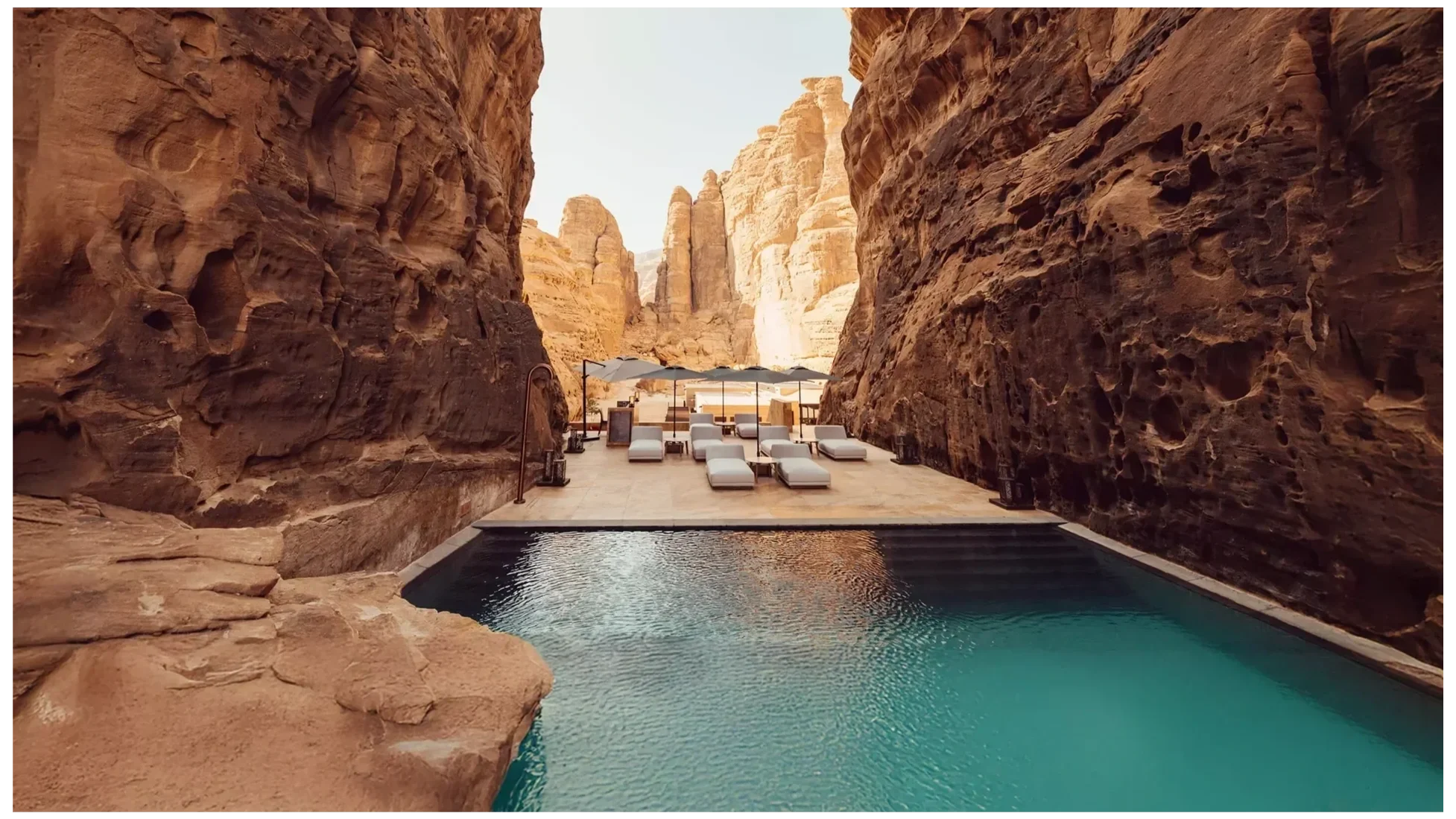
Visual architecture: Banyan Tree AlUla, Ashar Valley.
The distance between a commercial asset and an iconic brand is rarely a question of budget. It is conceptual coherence.
When I take on the strategic direction of a repositioning or the full conceptualization of a new project, the mandate is usually singular. Transform how the product is perceived. Elevate its narrative to global luxury standards. Build the internal structure capable of sustaining that growth without breaking under it. This is the terrain that work touches.
The symptom is clear. The cause, not always
When a client calls, in most cases they have already identified their pain points. Occupancy is not where it should be. ADR is not moving. The launch has not gained traction. The team is scattered. The brand never quite consolidated. Like someone reading their own symptoms, they research, try a few things on their own, attempt partial fixes.
Then there is another kind of call. Owners, investors, and leadership teams planning a launch, a relaunch, or an expansion. Here there is less pain and more strategic uncertainty. Open new properties. Enter new markets. Reposition an asset. What they need is a clear read on how to do it without putting the brand, the reputation, or the investment at risk.
In both cases, as in medicine, identifying the symptoms is only the first step. The precise diagnosis and the right treatment require another kind of look.
Most of the time, the question is not effort. It is capacity. Internal teams are not always built with the expertise or the time this specific work requires, and that is not a failure on their part. It is a question of expertise and time, not headcount. Companies bring me in to help their teams operate at this level. Not to become one of them.
A diffuse positioning. A confused brand architecture. An organizational structure that cannot hold the strategy. A narrative that does not connect with the right guest. The absence of a clear roadmap for a launch or expansion. An audiovisual identity quietly positioning the brand in the wrong direction.
It is not about having a videographer who shoots well. It is about whether the storytelling says the same thing across every channel, whether the message is diluted, or worse, whether it communicates something entirely different from what the brand is meant to be.
My role is not to execute what the client thinks they need. It is to make the correct diagnosis, identify the actual root cause, and design the parameters for a strategy that makes commercial and brand sense from there. That sometimes means not doing what the client asked for at first, but what the project actually requires to work over the long term.
In luxury hospitality, as in medicine, the value is never in prescribing quickly. It is in diagnosing correctly and designing the right treatment.
One ecosystem, not a menu of services
Repositioning a brand does not end with narrative. It has to convert. Paid campaign strategy, execution and optimization running in parallel across local and international markets, targeting the highest performing source markets for that category. High level strategic alliances that place the asset inside some of the most exclusive travel distribution networks in the world. Public relations coordinated with press agencies for the creation, oversight, and global distribution of materials. Every external vendor, from production companies to photographers, under direct creative supervision, because coherence at this level cannot be delegated without oversight.
Strategic Takeaway for Asset Managers: A rebrand that looks finished on the surface but has no unified oversight across paid media, PR, and content production will fragment within the first eighteen months. The fracture rarely shows up in the campaign. It shows up in the P&L.
None of it holds without the narrative and the identity behind it. Tone, copy, and target audience definition sit at the center of a repositioning, not as a slide in a deck, but as the filter every sentence has to pass through. The visual narrative carries equal weight. Shoot direction, framing, atmosphere, pacing, wardrobe. Strategy without a coherent visual language does not travel. It has to be built by the same hand, or the repositioning fractures at the first point of contact. Brand authorship and strategic coherence have to survive even when external agencies or internal teams later step in to execute. That is what Strategic Architecture™ and a disciplined approach to brand enhancement are built to protect.
Other projects start from an existing logo and need a full visual universe around it. An identity that changes depending on the platform is not an identity. It is a set of assets waiting to be unified. Both scenarios rest on the same brand architecture, paired with a strategy for collaborations and alliances built to survive contact with every channel without losing its core.
And none of it converts if the path a guest actually follows does not carry the same coherence. Every touchpoint gets weighed on its own terms: genuine user journey development from the first search to the confirmed booking, not just what a page looks like. What earns a place in the main menu, what moves to a secondary layer, and what does not survive the cut. Naming those sections carries equal weight. A label sets an expectation of what sits behind it, and a mismatch between the two erodes trust before a single price is shown.
Operational engineering, C-level advisory, and organizational structure
A repositioning does not hold if the internal structure behind it cannot sustain the same standard. This is where many luxury rebrands fail quietly, long after the campaign has launched. Workflow redesign and digitalization tools across departments come next. Then the Marketing, Sales, and Reservations organizational chart, rebuilt from the ground up. Talent acquisition and HR support, new professional profiles, a headhunting network activated for the right people. I set the standard and audit against it; I do not sit inside the org chart as headcount. At the top, C-level advisory covering global target audience definition and the annual marketing and commercial budgets that sustain the strategy over the long term.
How long this takes depends on the brand, its position, and its stage. Some transformations take twelve to twenty four months to become fully integrated. Others, with a mature leadership team already in place, close the gap in six months. Some commercial signals move within weeks—a paid campaign realigned, a booking path corrected, a stalled conversation with a distribution partner reopened. Those early wins matter, but they hold only if the architecture underneath is built to sustain them. Duration is a function of readiness, not ambition. What matters is whether the new standards hold under pressure and keep compounding value over time.
None of this is delivered as a document. There is no strategy handed over as a PDF, filed away, and left to the client to interpret. I stay through implementation, alongside the team to guide, until the standards are running on their own or the project has reached the ceiling of what that phase can hold.
If you are considering opening, relaunching, or positioning a luxury hospitality or wellness brand:
Founders, investors, and leadership teams inside a holding, group, or portfolio, in a pre-opening, relaunch, or repositioning phase, is where this work lives. Positioning and value proposition through target audience definition. Brand and experience architecture across rooms, F&B, memberships, rituals. Verbal and visual narrative rebuilt through brand enhancement and content creation. Marketing, sales, and bookings structure, roles, processes, team formation. Fractional CMO and Strategic Advisory connecting the C-level vision to tactical execution across paid media, PR, and luxury alliances.
I work directly with holdings, groups, and portfolios across hospitality and wellness, from my base in Bali with a strategic axis running through Europe. If it makes sense to talk through your project, you can reach me through my services page.
I am Marian Gómez, the Founder of Marian Gomez Consulting, a boutique strategic advisory for luxury hospitality, wellness, and tourism brands and holdings, based in Bali, advising clients across Asia, Europe, and the Americas. I publish around the 15th of each month in this blog, sometimes a few days earlier, sometimes later, and occasionally outside that cadence when something worth saying surfaces in the industry. What you will find here leans more didactic and deliberately deep, not written for general consumption, but for those who operate at the level where these distinctions matter. For more applied, day-to-day thinking and a slightly sharper sense of humor, find me at The Brand Architecture, a publication written for founders, investors, and leadership teams in luxury hospitality, with a strategic lens on wellness, travel, tourism, and longevity. Not about ideas, but about two decades of expertise in brand and marketing strategy across luxury hospitality, tourism, and wellness.
You can subscribe to The Brand Architecture directly on Substack. It is free, and it is the only way to receive new pieces as they publish.
Beyond the Spa: How Integrated Longevity is Redefining Luxury Hospitality
Traditional wellness is no longer enough for the ultra-high-net-worth guest. As the shift from "relaxation" to "measurable outcomes" accelerates, investors and operators face a critical choice: evolve into a longevity destination or risk commoditization. Discover the strategic roadmap to integrating clinical-grade wellness, why brand dilution is the biggest risk for major chains, and the financial metrics driving this $5.6 trillion shift.
The luxury hotel sector is experiencing a silent yet profound transformation. High-end guests no longer seek just temporary relaxation: they want measurable results that impact their long-term health. This evolution is creating new value opportunities for both operators and investors.
The Paradigm Shift: From Experience to Outcome
For decades, hotel wellness focused on sensory experiences: massages, saunas, facials. But the pandemic accelerated a latent demand: guests now ask "does this actually work?" before booking.
The difference is fundamental. A traditional spa offers two hours of relaxation. An integrated longevity program offers:
Pre and post biometric data: analysis of cortisol, systemic inflammation, or sleep quality through wearables
Personalized nutrition: menus designed according to individual metabolic testing, not just generic dietary preferences
Scientifically-backed protocols: from circadian optimization to supplementation based on actual deficiencies
This transition isn't theoretical. Resorts like SHA Wellness Clinic in Spain or Clinique La Prairie in Switzerland report occupancy rates above 80% annually with average rates 40-60% higher than traditional wellness competitors.
Why Investors Are Paying Attention
Three factors are driving financial interest in these models:
1. Higher value per guest
A traditional spa guest spends between $3,000-5,000 in a week. A longevity program participant spends $8,000-15,000 in the same stay, including tests, medical consultancy, and personalized supplementation.
2. Recurring revenue
The annual membership model or quarterly returns for follow-up generates predictable flows. Some resorts report that 35-45% of their longevity program guests return at least twice a year.
3. Sustainable competitive differentiation
While a competitor can copy your spa design in 18 months, replicating a longevity ecosystem with medical partnerships, certifications, and clinical reputation takes 3-5 years. This creates real barriers to entry.
The Mistake Major Chains Are Making
Several international hotel chains (we all know which ones) have recently launched into the longevity segment. The problem: they're doing it under their traditional hospitality brands.
Here's the fundamental disconnect: longevity is a rather particular industry that requires unique differentiators. A guest seeking tangible medical results doesn't want the backing of a brand known for its breakfast buffets or points programs. They want scientific, medical, and holistic credibility.
It doesn't matter how many years you've been operating premium or standard hotels. When someone invests $12,000 in a biomarker optimization program, they don't trust your hotel track record. They trust your medical ecosystem, your clinical certifications, and your reputation in health outcomes.
The smart play: Create a sister brand under the same corporate umbrella. Exactly what Kerzner International (the group behind One&Only) did by launching SIRO. They didn't try to fit longevity into One&Only. They created a completely new identity with its own DNA, positioning, and brand promise focused exclusively on performance and scientific wellness.
This isn't coincidence. It's strategy. Because mixing longevity with traditional hospitality dilutes both value propositions.
Three Essential Operational Components
Based on work with resorts that have successfully implemented these models, three elements are non-negotiable:
1. Certified Medical Partnerships
Hiring a nutritionist isn't enough. You need alliances with diagnostic laboratories (for biomarkers), licensed functional or longevity physicians, and certified medical technology providers (like Oura for sleep, or InsideTracker for blood analysis).
2. Measurement and Tracking Technology
Guests in this segment expect continuous access to their data. This requires:
Digital platform where they can see metric evolution
Integration with their personal wearables (Apple Watch, Oura, Whoop)
Post-stay dashboard with recommendations to continue at home
3. Team Training
Your F&B staff must understand why one guest receives a lectin-free menu while another maximizes protein. Therapists need to comprehend muscle recovery protocols guided by HRV data.
This doesn't happen with a two-day workshop. It requires continuous training and, frequently, selective hiring of profiles with backgrounds in health coaching or clinical nutrition.
The Implementation Challenge
The theory is seductive, but execution is where most fail. How do you integrate medical partnerships without compromising your brand? What technology justifies the investment and what's just noise? How do you train your team without turning the resort into a cold clinic?
These resorts didn't improvise. They followed a specific roadmap that balances investment, operational risk, and return expectations. The difference between a program that generates extreme loyalty and one that becomes just another costly amenity lies in the first 90 days of strategic design.
The Questions You Should Ask Yourself
Before jumping in, be honest about your asset:
Does your target market really demand this, or are you chasing a trend?
Do you have operational capacity to manage medical-legal complexity?
Is your management team committed to a 24-36 month horizon to see significant ROI?
Integrated longevity isn't for every resort, but for those with the right positioning, location, and resources, it represents one of the few genuine forms of differentiation in an increasingly commoditized market.
Marian Gomez is a strategic consultant specializing in luxury hotel asset positioning. She has advised resorts in Europe, America, and Asia on the integration of luxury hospitality and advanced wellness and longevity centres.
Is your asset ready to explore this model? Let's connect for a strategic evaluation.