
Seniority is Influence: Communication is the Ultimate C-Level Asset
Seniority is not about executing better; it’s about having the influence in the room to protect the strategy."
After nearly 20 years in the industry, I’ve realized that the biggest tax on a luxury brand isn't the competition—it's the internal "silos" and the cost of micromanagement.
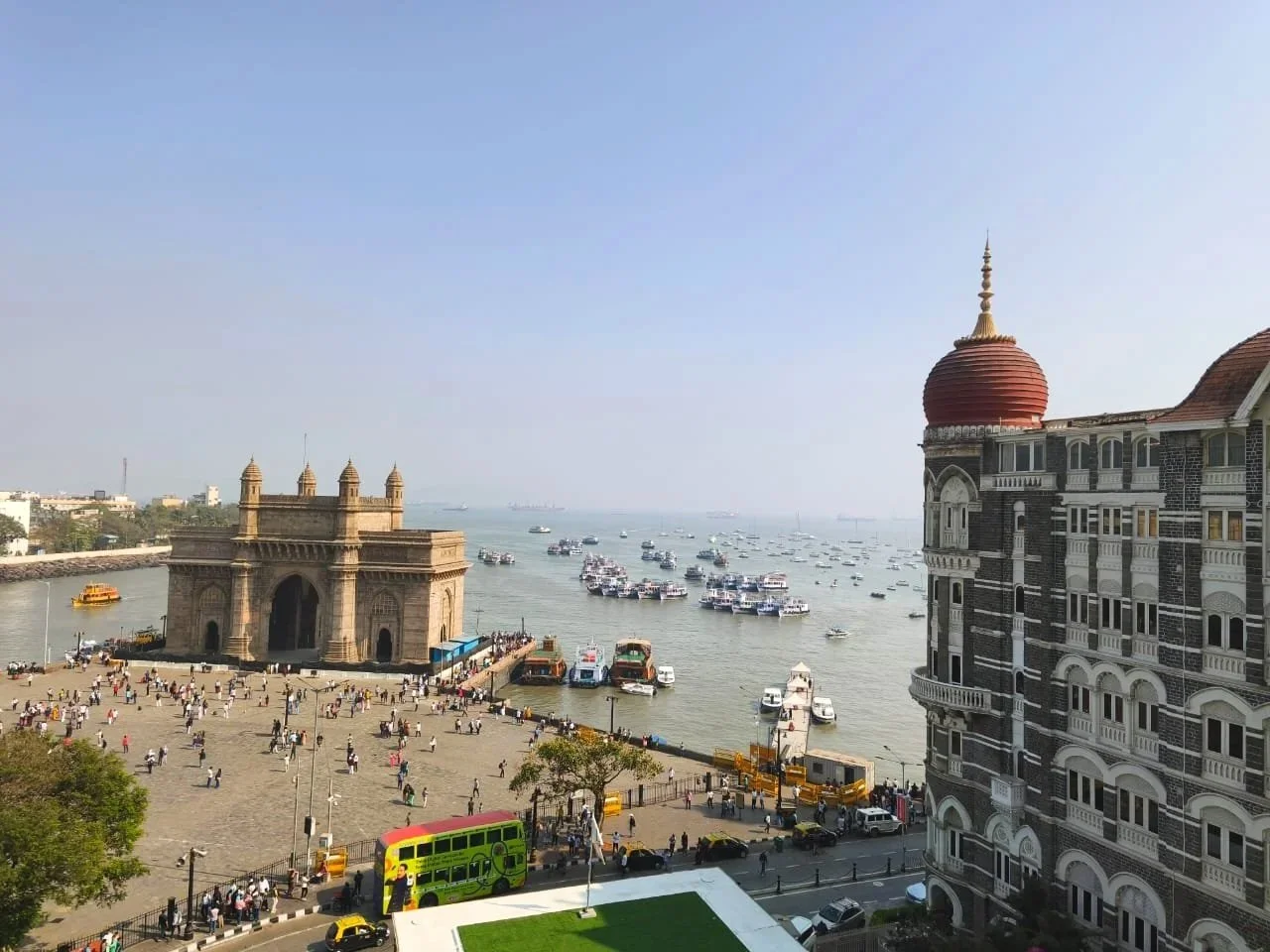
From my time collaborating with UNESCO to a recent deep-dive at the Taj Mahal Palace in Mumbai, I analyze why "polishing your own piece of marble" is never enough to level the organizational ground. In the world of Luxury Hospitality and Wellness, if your storytelling doesn't protect your heritage, you're just another commodity.
Marian Gomez Consulting
Recently, while advising a VP of Marketing on building their executive team, a phrase came up that perfectly encapsulates the new standard of authority: "For me, seniority is influence in the room." At the C-Level, execution is no longer the differentiator; it is taken for granted. Real seniority is measured by the ability to protect the strategic function in a room filled with competing priorities, conflicting opinions, and, occasionally, personal whims.
The Strategic Filter and the "Canadian Newspaper"
There are anecdotes you never forget, and even after a decade, this one still makes me sweat. I remember a Global IT Director (not sales, not investors, not even the CEO… but IT) approaching me to suggest we run an ad in a tiny Canadian newspaper, one of those classified ads with only 20 words. My response was a battery of questions that every leader must be able to hold their ground on: Why that specific medium? To what end? Who is the audience, and does it truly align with ours?
Without that influence in the room to question such occurrences, brand strategy quickly dissolves into a collage of caprices. If the leader fails to act as a filter, the budget is diluted into ROI-less tactics. In luxury hospitality and wellness, this is lethal: every euro counts toward premium positioning.
The Identity Trap: Globalization vs. Heritage
Globalization brings us closer to a broader spectrum of cultures, but it carries a hidden risk: the loss of a brand’s soul. I recall a project during my university years in Belgium, collaborating with UNESCO. Carmen, a brilliant Mexican leader, was heading the strategy. I remember her frustration when I argued that uncontrolled globalization erodes cultural identity. Progress is necessary, yes, but preserving cultural heritage is what allows us to grow with unique identities and truly referential brands.
The Taj Mahal Palace is the ultimate reference of Indian heritage. In such an iconic setting, Ayurveda isn't just a "mandatory" spa service; it should be the undisputed star product. When a brand fails to own its storytelling and its cultural roots, it becomes just another luxury commodity. Strategic seniority means having the voice to say: "This is who we are, and we will not dilute it."
Autonomy as an Asset
I experienced this tension firsthand recently at the Taj Mahal Palace in Mumbai. On the surface, it is a marvel of operational autonomy: a decisive and graceful staff that remembers guest details masterfully. No one, even at the most basic level, waits for a "pat on the back" from their manager to make a decision, eliminating any potential bottlenecks. I’ve always held onto something one of my great industry mentors, Gonzalo Franyutti, used to say: "The worst kind of management is the one that never happens."
Nothing is more cost-effective for an owner than an autonomous team. But that autonomy requires leaders who flee from micromanagement. You cannot spend your time overseeing every comma, every image, the toner in the photocopiers, or the refills for the coffee machine. Micromanagement is not supervision; it is a tax on agility that stifles talent and paralyzes company growth.
To the Hospitality, Tourism & Wellness teams I train (cousins, but not identical twins, friends), I always say the same thing: "Don’t worry about making mistakes. I make them too. We aren't performing surgery; nobody dies." Fear is the ultimate financial bottleneck: it paralyzes execution and breeds burnout. However, without strategic communication to align that autonomy, the system eventually collapses.
The Trap of the Silent Marble
Even with excellent service, the Taj revealed pathological disconnections that weren’t just anecdotes. We saw a blind CRM, with marketing operating in its own silo, offering breakfasts that were already part of the contract. We encountered a "False Hammam": a hall of superb marble devoid of any real substance, where product and communication had never actually spoken to each other. Even the Spa Director, despite his expertise, ended up selling what the hotel wanted to push rather than what the client was looking to buy.
No one owned the complete experience. This isn't a failure of individuals; it’s an organizational design flaw. Departments don’t talk because the structure doesn’t require them to. The result is a silent chaos where every department speaks its own language, and the client is the one who ends up paying for the translation.
Leveling the Organizational Ground
Every company has its own Achilles' heel—often structural rather than marketing-related. True seniority is having the influence to level the ground: to say "no" to departmental inertia and "yes" to ecosystemic coherence. If every department only polishes its own piece of marble, the floor will never be level.
Execution earns credibility, but influence protects your leverage.
Final Note: After nearly 20 years in the industry and traveling for as long as I can remember, this is the first time I’ve genuinely wanted to return to a hotel solely for the service and the global experience, despite its strategic gaps (and their excessive AC! Hahaha). In the end, operational excellence is what brings you back, but strategy is what makes the business sustainable.
If you noticed a bit of silence here on February 15th and March 1st, it wasn't a CRM glitch. I was "watching the bulls from the sidelines," as we say in Spain. In the end, you can’t truly disconnect from what you drink, but you certainly breathe differently (with tranquility and without the tachycardia).
I’d love to know if "Canadian newspapers" ever land in your boardroom or if you’ve felt that urgent need to level the floor.
I help iconic brands in Luxury Hospitality, Tourism, and Wellness level their organizational ground and transform their marketing strategy into a coherent, agile ecosystem. If you're ready to turn influence into impact, let's talk at www.mariangomez.com
We are connected :)
Marketing Architecture vs. Tactical Execution: The Blind Spot in Longevity & Hospitality Investment
Most luxury hotel owners believe they have a marketing problem. They’re wrong. They have an architecture problem. Discover why burning budgets on "pretty content" is failing your P&L and how to restructure your marketing to protect asset valuation in the Longevity and Advanced Wellness sector.
Most luxury hotel owners believe they have a marketing problem. They’re wrong. What they have is an architecture problem.
I’ve audited enough assets to see a recurring pattern: properties burning six-figure budgets on social media agencies, content creators, and influencer campaigns. The Instagram metrics are glowing; the P&L, however, is not.
The result is inflated operational spend that fails to move RevPAR, stagnant direct bookings, and an asset valuation that doesn’t reflect its true potential.
The Gap Between Rigor and Superficiality
In the Longevity & Advanced Wellness sector, the error is systemic. You cannot sell high-precision health protocols using "beach resort" marketing tactics.
The Error (Tactics): Buying content calendars, "pretty" photos, and ad management.
The Solution (Architecture): Designing an infrastructure connected to the P&L, systems that convert awareness into qualified bookings, and a team built for accountability.
The 3 Pillars of Marketing Architecture
To scale, you don’t need more "likes." You need process engineering:
Process Audit: Identifying where the guest experience breaks from the first ad exposure to the final booking. Most luxury assets leak 60% of their leads due to a lack of conversion infrastructure.
Team Engineering: Structuring internal talent for efficiency, not volume. Defining who leads the strategy, who executes, and who verifies the scientific integrity of the communication.
Equity Protection: Ensuring every marketing dollar increases the property’s asset value, not just its engagement metrics.
The Fractional CMO Solution
This is where the traditional full-time Chief Marketing Officer model fails. Investment funds and independent owners don’t need a static executive settling into the organizational chart; they need agile, external leadership with an owner’s mindset.
A Fractional CMO steps in to audit with brutal honesty, detect capital leaks, and design the ecosystem required for the asset to scale without losing its essence. You aren't buying execution; you’re buying strategic design and the safeguard of your investment.
If you are an investor or owner, ask yourself three questions:
Can your marketing leadership explain how their work affects your asset valuation today?
Are they optimizing for Guest Lifetime Value or for vanity metrics?
Are they measuring qualified bookings or just impressions?
If the answers make you uncomfortable, you don’t have a budget problem. You have an architecture problem.
Marian Gomez is a Fractional CMO and Strategic Consultant. She helps funds and investors restructure marketing operations across Luxury Hospitality, Wellness, and Longevity assets.
Is your marketing spend failing to reflect in your business results? Let’s connect for a 30-minute diagnostic to identify where your capital is leaking.