
No Structure, No Marketing: The High Cost of Novelty Without Foundation
Real luxury isn't in surprising the client, but in eliminating their uncertainty.
In an industry obsessed with "riding the wave" of trends, we’ve forgotten that true exclusivity is built on predictability, not fireworks. From the foundational lessons of Kemmons Wilson to the complex human ecosystems of modern longevity, I explore why impeccable CEX requires more than just a CRM—it requires Strategic Architecture.
Is your brand promise a robust ecosystem or just cardboard scenery?
I recently read an interview with Kemmons Wilson, founder of Holiday Inn. While often studied as a mass-market success story, Wilson grasped a truth that today, in ultra-luxury, seems forgotten: real value isn't in surprising the client but eliminating their uncertainty.
I've worked on relaunching global brands that set the pace in the luxury industry; brands under constant pressure to "ride the wave," to be the trend week after week. It's exhausting stress. But whether you're a disruptor or not, clients seek something far more primal: a stay that's easy and pleasurable, where they feel heard and you anticipate their needs.
It sounds like a lot, but it's not. It's simply architecture.
The Client's Obstacle Course and the CRM Mirage
In strategy meetings, I repeat the same: anticipation requires a solid CRM and impeccable CEX (Customer Experience). Everyone nods, but then you see clients trapped in an inefficient "obstacle course" of processes.
Why? We've obsessed over external disruption while neglecting internal structure. We want fluid experiences, yet force clients through operational chaos that even the best staff can't fully compensate for.
The Commitment Myth and the Cost of Turnover
We hear "new generations lack commitment." I say: No. The issue is companies aren't committed to hospitality's foundation. If your staff turns over every six months, your business is expensive, very expensive. You're burning money every time someone learns the system and leaves due to burnout, poor training, or unsustainable workflows.
Gallup data shows global employee engagement has dropped to 20%. It’s a stark reminder that in any high-end project, the most sophisticated and complex layer of the architecture is always the human ecosystem. Without a structure that supports those who deliver the experience, even the most brilliant marketing remains a facade. We can't blame just the PESTLE (Political, Economic, Social, Technological, and Environmental factors)—it plays its part. But we mustn't fuel the problem from the micro level. Otherwise, marketing is just cardboard scenery.
Reliability as the Ultimate Luxury
True luxury hospitality isn't fireworks; it's invisible structure that works.
No training, no anticipation.
No rest, no active listening.
No system, no magic.
In high-end tourism, longevity and wellness, predictability is the greatest luxury. Clients "let go" because they trust a robust ecosystem.
No structure, no marketing.
I'm Marian Gomez, Fractional CMO, Strategic Consultant, and Founder of Marian Gomez Consulting.
I help Iconic Brands reclaim their essence, build it from scratch, or redesign it so brand promise and operations align. If you seek strategic architecture—not just fireworks—let's talk.
Seniority is Influence: Communication is the Ultimate C-Level Asset
Seniority is not about executing better; it’s about having the influence in the room to protect the strategy."
After nearly 20 years in the industry, I’ve realized that the biggest tax on a luxury brand isn't the competition—it's the internal "silos" and the cost of micromanagement.
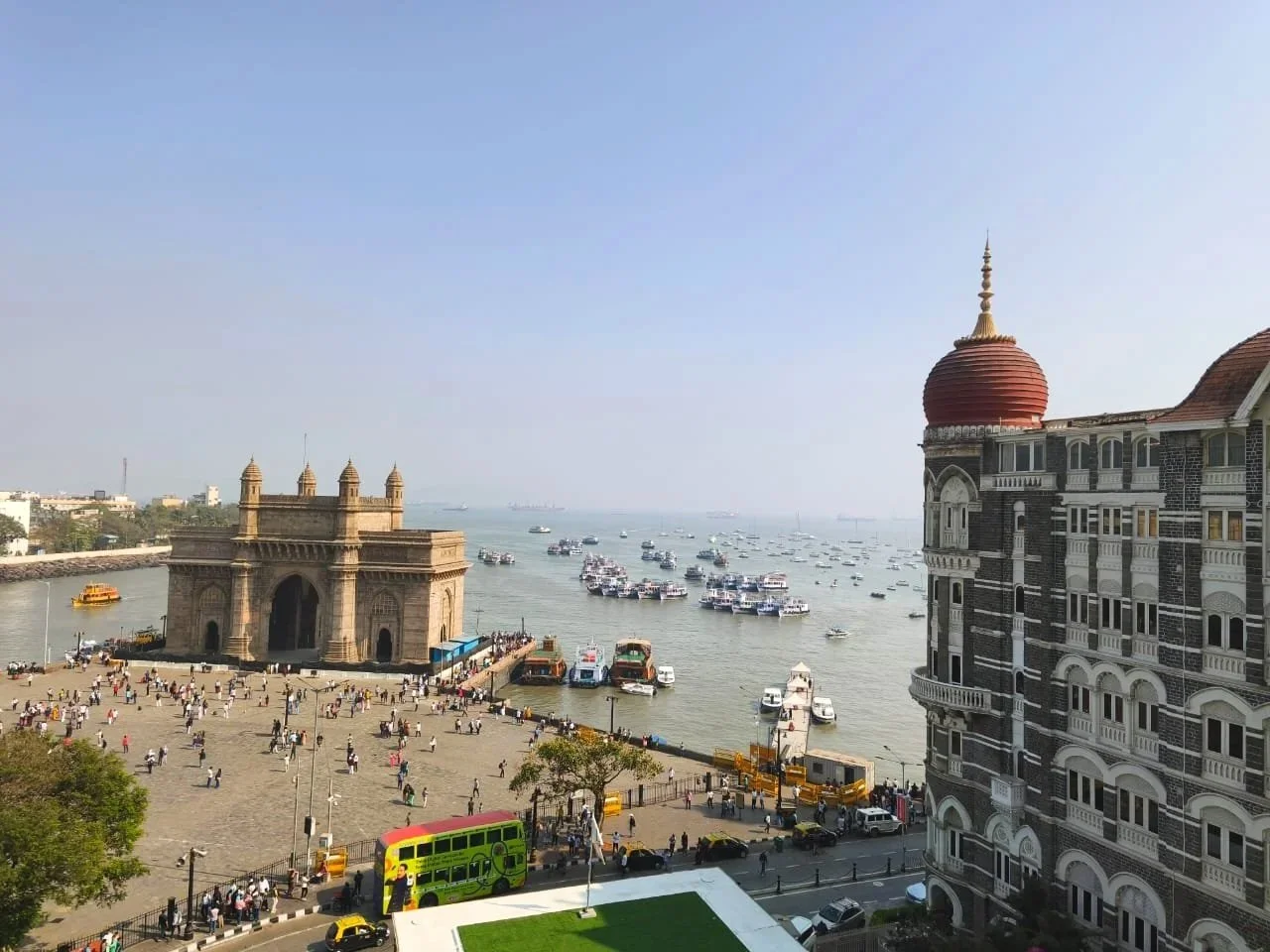
From my time collaborating with UNESCO to a recent deep-dive at the Taj Mahal Palace in Mumbai, I analyze why "polishing your own piece of marble" is never enough to level the organizational ground. In the world of Luxury Hospitality and Wellness, if your storytelling doesn't protect your heritage, you're just another commodity.
Marian Gomez Consulting
Recently, while advising a VP of Marketing on building their executive team, a phrase came up that perfectly encapsulates the new standard of authority: "For me, seniority is influence in the room." At the C-Level, execution is no longer the differentiator; it is taken for granted. Real seniority is measured by the ability to protect the strategic function in a room filled with competing priorities, conflicting opinions, and, occasionally, personal whims.
The Strategic Filter and the "Canadian Newspaper"
There are anecdotes you never forget, and even after a decade, this one still makes me sweat. I remember a Global IT Director (not sales, not investors, not even the CEO… but IT) approaching me to suggest we run an ad in a tiny Canadian newspaper, one of those classified ads with only 20 words. My response was a battery of questions that every leader must be able to hold their ground on: Why that specific medium? To what end? Who is the audience, and does it truly align with ours?
Without that influence in the room to question such occurrences, brand strategy quickly dissolves into a collage of caprices. If the leader fails to act as a filter, the budget is diluted into ROI-less tactics. In luxury hospitality and wellness, this is lethal: every euro counts toward premium positioning.
The Identity Trap: Globalization vs. Heritage
Globalization brings us closer to a broader spectrum of cultures, but it carries a hidden risk: the loss of a brand’s soul. I recall a project during my university years in Belgium, collaborating with UNESCO. Carmen, a brilliant Mexican leader, was heading the strategy. I remember her frustration when I argued that uncontrolled globalization erodes cultural identity. Progress is necessary, yes, but preserving cultural heritage is what allows us to grow with unique identities and truly referential brands.
The Taj Mahal Palace is the ultimate reference of Indian heritage. In such an iconic setting, Ayurveda isn't just a "mandatory" spa service; it should be the undisputed star product. When a brand fails to own its storytelling and its cultural roots, it becomes just another luxury commodity. Strategic seniority means having the voice to say: "This is who we are, and we will not dilute it."
Autonomy as an Asset
I experienced this tension firsthand recently at the Taj Mahal Palace in Mumbai. On the surface, it is a marvel of operational autonomy: a decisive and graceful staff that remembers guest details masterfully. No one, even at the most basic level, waits for a "pat on the back" from their manager to make a decision, eliminating any potential bottlenecks. I’ve always held onto something one of my great industry mentors, Gonzalo Franyutti, used to say: "The worst kind of management is the one that never happens."
Nothing is more cost-effective for an owner than an autonomous team. But that autonomy requires leaders who flee from micromanagement. You cannot spend your time overseeing every comma, every image, the toner in the photocopiers, or the refills for the coffee machine. Micromanagement is not supervision; it is a tax on agility that stifles talent and paralyzes company growth.
To the Hospitality, Tourism & Wellness teams I train (cousins, but not identical twins, friends), I always say the same thing: "Don’t worry about making mistakes. I make them too. We aren't performing surgery; nobody dies." Fear is the ultimate financial bottleneck: it paralyzes execution and breeds burnout. However, without strategic communication to align that autonomy, the system eventually collapses.
The Trap of the Silent Marble
Even with excellent service, the Taj revealed pathological disconnections that weren’t just anecdotes. We saw a blind CRM, with marketing operating in its own silo, offering breakfasts that were already part of the contract. We encountered a "False Hammam": a hall of superb marble devoid of any real substance, where product and communication had never actually spoken to each other. Even the Spa Director, despite his expertise, ended up selling what the hotel wanted to push rather than what the client was looking to buy.
No one owned the complete experience. This isn't a failure of individuals; it’s an organizational design flaw. Departments don’t talk because the structure doesn’t require them to. The result is a silent chaos where every department speaks its own language, and the client is the one who ends up paying for the translation.
Leveling the Organizational Ground
Every company has its own Achilles' heel—often structural rather than marketing-related. True seniority is having the influence to level the ground: to say "no" to departmental inertia and "yes" to ecosystemic coherence. If every department only polishes its own piece of marble, the floor will never be level.
Execution earns credibility, but influence protects your leverage.
Final Note: After nearly 20 years in the industry and traveling for as long as I can remember, this is the first time I’ve genuinely wanted to return to a hotel solely for the service and the global experience, despite its strategic gaps (and their excessive AC! Hahaha). In the end, operational excellence is what brings you back, but strategy is what makes the business sustainable.
If you noticed a bit of silence here on February 15th and March 1st, it wasn't a CRM glitch. I was "watching the bulls from the sidelines," as we say in Spain. In the end, you can’t truly disconnect from what you drink, but you certainly breathe differently (with tranquility and without the tachycardia).
I’d love to know if "Canadian newspapers" ever land in your boardroom or if you’ve felt that urgent need to level the floor.
I help iconic brands in Luxury Hospitality, Tourism, and Wellness level their organizational ground and transform their marketing strategy into a coherent, agile ecosystem. If you're ready to turn influence into impact, let's talk at www.mariangomez.com
We are connected :)
Beyond the Spa: How Integrated Longevity is Redefining Luxury Hospitality
Traditional wellness is no longer enough for the ultra-high-net-worth guest. As the shift from "relaxation" to "measurable outcomes" accelerates, investors and operators face a critical choice: evolve into a longevity destination or risk commoditization. Discover the strategic roadmap to integrating clinical-grade wellness, why brand dilution is the biggest risk for major chains, and the financial metrics driving this $5.6 trillion shift.
The luxury hotel sector is experiencing a silent yet profound transformation. High-end guests no longer seek just temporary relaxation: they want measurable results that impact their long-term health. This evolution is creating new value opportunities for both operators and investors.
The Paradigm Shift: From Experience to Outcome
For decades, hotel wellness focused on sensory experiences: massages, saunas, facials. But the pandemic accelerated a latent demand: guests now ask "does this actually work?" before booking.
The difference is fundamental. A traditional spa offers two hours of relaxation. An integrated longevity program offers:
Pre and post biometric data: analysis of cortisol, systemic inflammation, or sleep quality through wearables
Personalized nutrition: menus designed according to individual metabolic testing, not just generic dietary preferences
Scientifically-backed protocols: from circadian optimization to supplementation based on actual deficiencies
This transition isn't theoretical. Resorts like SHA Wellness Clinic in Spain or Clinique La Prairie in Switzerland report occupancy rates above 80% annually with average rates 40-60% higher than traditional wellness competitors.
Why Investors Are Paying Attention
Three factors are driving financial interest in these models:
1. Higher value per guest
A traditional spa guest spends between $3,000-5,000 in a week. A longevity program participant spends $8,000-15,000 in the same stay, including tests, medical consultancy, and personalized supplementation.
2. Recurring revenue
The annual membership model or quarterly returns for follow-up generates predictable flows. Some resorts report that 35-45% of their longevity program guests return at least twice a year.
3. Sustainable competitive differentiation
While a competitor can copy your spa design in 18 months, replicating a longevity ecosystem with medical partnerships, certifications, and clinical reputation takes 3-5 years. This creates real barriers to entry.
The Mistake Major Chains Are Making
Several international hotel chains (we all know which ones) have recently launched into the longevity segment. The problem: they're doing it under their traditional hospitality brands.
Here's the fundamental disconnect: longevity is a rather particular industry that requires unique differentiators. A guest seeking tangible medical results doesn't want the backing of a brand known for its breakfast buffets or points programs. They want scientific, medical, and holistic credibility.
It doesn't matter how many years you've been operating premium or standard hotels. When someone invests $12,000 in a biomarker optimization program, they don't trust your hotel track record. They trust your medical ecosystem, your clinical certifications, and your reputation in health outcomes.
The smart play: Create a sister brand under the same corporate umbrella. Exactly what Kerzner International (the group behind One&Only) did by launching SIRO. They didn't try to fit longevity into One&Only. They created a completely new identity with its own DNA, positioning, and brand promise focused exclusively on performance and scientific wellness.
This isn't coincidence. It's strategy. Because mixing longevity with traditional hospitality dilutes both value propositions.
Three Essential Operational Components
Based on work with resorts that have successfully implemented these models, three elements are non-negotiable:
1. Certified Medical Partnerships
Hiring a nutritionist isn't enough. You need alliances with diagnostic laboratories (for biomarkers), licensed functional or longevity physicians, and certified medical technology providers (like Oura for sleep, or InsideTracker for blood analysis).
2. Measurement and Tracking Technology
Guests in this segment expect continuous access to their data. This requires:
Digital platform where they can see metric evolution
Integration with their personal wearables (Apple Watch, Oura, Whoop)
Post-stay dashboard with recommendations to continue at home
3. Team Training
Your F&B staff must understand why one guest receives a lectin-free menu while another maximizes protein. Therapists need to comprehend muscle recovery protocols guided by HRV data.
This doesn't happen with a two-day workshop. It requires continuous training and, frequently, selective hiring of profiles with backgrounds in health coaching or clinical nutrition.
The Implementation Challenge
The theory is seductive, but execution is where most fail. How do you integrate medical partnerships without compromising your brand? What technology justifies the investment and what's just noise? How do you train your team without turning the resort into a cold clinic?
These resorts didn't improvise. They followed a specific roadmap that balances investment, operational risk, and return expectations. The difference between a program that generates extreme loyalty and one that becomes just another costly amenity lies in the first 90 days of strategic design.
The Questions You Should Ask Yourself
Before jumping in, be honest about your asset:
Does your target market really demand this, or are you chasing a trend?
Do you have operational capacity to manage medical-legal complexity?
Is your management team committed to a 24-36 month horizon to see significant ROI?
Integrated longevity isn't for every resort, but for those with the right positioning, location, and resources, it represents one of the few genuine forms of differentiation in an increasingly commoditized market.
Marian Gomez is a strategic consultant specializing in luxury hotel asset positioning. She has advised resorts in Europe, America, and Asia on the integration of luxury hospitality and advanced wellness and longevity centres.
Is your asset ready to explore this model? Let's connect for a strategic evaluation.