
Your Hospitality Structure is Suffocating Your Talent
Stop running 2026 operations on 1990s software. Learn why archaic corporate structures are suffocating growth in Wellness, Longevity and Hospitality, and how to transition toward an agile, high-performance ecosystem.
For years I’ve been seeing the same posts on social media, opinion pieces and expert conferences lamenting the same thing we’ve heard for the last five or seven years (maybe more). Talent retention, how we need to “woo” employees, how people don’t want to work in hospitality anymore…
The problem is not the people. The problem is that the system is 1990 software trying to run in a 2026 world. The system is obsolete.
The Prophet Antonio
Back then, my boss —the General Manager, a funny guy who knew the trade from the ground up and had only a couple of years left before retirement— used to tell me between laughs: "Marian, the problem is there are too many chiefs and not enough Indians." I don’t know if he was related to Nostradamus, but the structure has definitely become unsustainable.
Big Corporates: the game of internal PR
In the C‑Level and management of established companies, a dangerous game has taken root: internal PR. The structures are so archaic they look more like political parties fighting for the next candidacy than high‑performance teams.
More energy is spent “navigating” the hierarchy than innovating.
Silos are created where information doesn’t flow.
The result: the structure burns the best people.
Unless the CEO truly wants to change the dynamics, this won’t change. Middle management —the ones who actually move the operation— are exhausted pushing against a wall of bureaucracy more interested in taking photos for the press than in doing anything for the company.
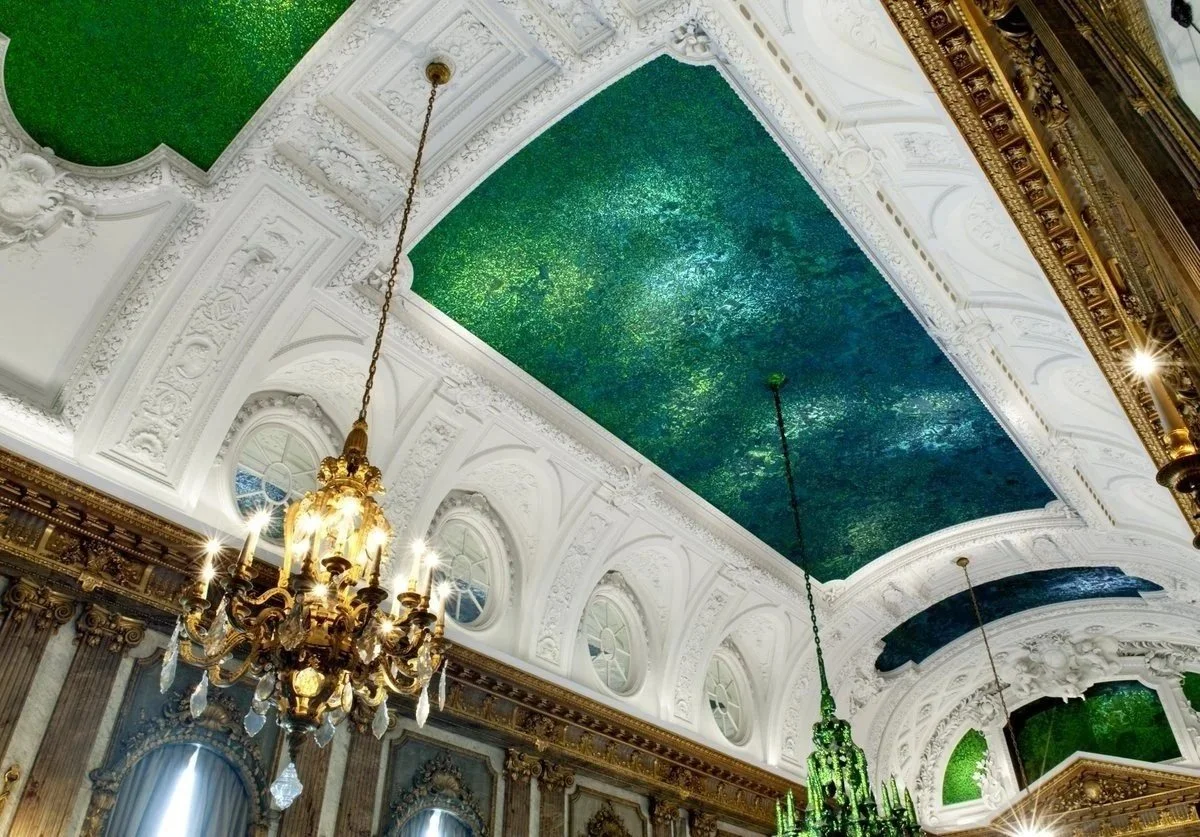
If you pause for a moment and look at what big hotel chains are doing, you’ll see they’re starting to copy and create sub‑brands under their umbrella that imitate startup models. But… and I hope I’m wrong… they’ll end up being museum brands. Because the problem lies in their DNA and in their slow implementation. Their top level is like the Sistine Chapel: beautiful to look at, but not something you’d want in your living room. Imagine all the maintenance… and add that it doesn’t resonate with the changes and redecorations over the years. That’s what they are: a museum.
Mid‑market and startups: agility and DNA
The management of a startup and mid‑market is, today, my favorite. When it flows, the system is agile. Many people say the industry changes quickly. I disagree. The industry evolves organically through sociological; political, technological, environmental and economic changes. The problem is that the corporate world waits five years for a “trend” to be safe, while the startup has already taken action.
In these companies:
Teams are dynamic.
They have a voice and a vote.
The DNA of the business makes people want to be there. Not because they’re “wooed” with Friday pizza they actually hate, but because the purpose is real.
The investor usually knows not only the C‑level, but even the waiters, which gives them a more realistic view of the business and how operations are lived on the front line.
The executing body: where structure really matters
This is where it gets sensitive. We cannot ignore a key factor: the base teams. Waiters, housekeepers, line staff. This is where Big Companies usually win by a landslide (when they do it well). They have the logistical capacity to offer what a startup sometimes forgets:
Stability and clarity: The executing profile sometimes doesn’t want “creative flexibility” or headaches. They want to know what they have to do, what their schedules and shifts are. They want structural stability, not the investor coming to the housekeeper and telling her to fix the email issue… without having any idea what he’s talking about or who she should ask, under the stunned gaze of an employee who doesn’t have email because she’s a housekeeper, not IT, and it slips his mind that for that he has a GM who already knows who to send the message to (the recipient) and ensures it happens successfully.
The housing challenge: Hotel chains already have in their DNA that if they open in a remote area or in tight markets like Mallorca or Ibiza, they must solve the housing problem for their team. The startup falters here: it finds flexibility for its C‑Level, but loses its executors because it lacks physical infrastructure. Focused on their C‑Level, they forget they also need someone to deliver the service and execute. Otherwise, you only have a nice photo of your ExCom in the office.
The question is not how to retain talent. The question is: Is my structure a living ecosystem or are we still painting Neanderthal caves?
Evolution is inevitable. You can keep talking about the same trends for another five years at FITUR, or you can start changing the dynamics of the process.
Do you feel your structure is slowing down the growth of your Hospitality or Wellness project?
We help companies transition to an agile and human ecosystem as part of their strategy. Let’s talk at www.mariangomez.com.

Why Your Luxury Hotel Is Competing on Price (And Losing): The Framework That Changes Everything
Discover why competing on price is losing the luxury hotel market and learn a unique emotional positioning framework to command premium rates and stand out with unforgettable guest experiences.
Most luxury hotels think they're competing against other hotels. Wrong.
You're competing for emotional territory in your guest's mind, and most properties are fighting over the same cramped space while vast territories remain unclaimed.
The Common Marketing Mistake in Luxury Hotels
Walk into any luxury hotel marketing meeting, and you'll hear the same conversation:
"Our competitors dropped rates 15%."
"We have to match them or lose bookings."
"Let's push the spa and restaurant more."
If you're competing on price, you've already lost the positioning war.
After working with luxury hospitality brands across three continents, I've seen this pattern repeatedly: hotels with identical amenities, similar service levels, and comparable locations, yet one commands 40% higher rates with 85% occupancy while the other struggles to fill rooms. The difference? Strategic positioning.
The Competitive Positioning Framework: Four Steps to Premium Pricing Power
Step 1: Map the Emotional Landscape, Not Just the Physical
Most hotels map their competition geographically. Fatal mistake.
Your real competitors aren't the hotels within a 5-mile radius; they're any brand competing for the same emotional need your guest seeks to fulfill.
What does your guest truly seek beyond a bed?
Status and social currency?
Complete escape and transformation?
Deep cultural immersion?
Spiritual renewal?
Creative inspiration?
Business power positioning?
Study the masters:
Four Seasons owns "flawless service anticipation"
Aman owns "spiritual sanctuary"
One&Only owns "rare hideaway experiences"
Capella owns "curated cultural immersion"
Notice something? None of these brands compete on thread count or marble thickness. They've claimed distinct emotional territories.
The exercise: Create a positioning map plotting competitors on key emotional drivers. Where are the white spaces?
Step 2: Discover Your Irreplicable "Reason Why"
Every luxury brand needs an unassailable "reason why" they can deliver their emotional promise better than anyone else.
This isn't about what you do; it's about why you're uniquely qualified to do it.
Location alone isn't enough. Everyone has a view, a beach, or historic charm. The real differentiators:
Unreplicable heritage: The Gritti Palace's 500-year history as a Doge's residence
Founder philosophy: Aman's Adrian Zecha vision of creating sanctuaries, not hotels
Exclusive access: Necker Island's private island status
Proprietary methodology: COMO's wellness expertise from decades of innovation
Cultural authenticity: A ryokan family's 15-generation hospitality tradition
The test: Could a competitor with an unlimited budget replicate your "reason why" in five years? If yes, it's not defensible enough.
Step 3: Explore Untapped Emotional White Space
Most hotels cluster around the same 3-4 attributes: service, location, amenities, and design. They're fighting a battle for the same overcrowded territory.
Meanwhile, entire emotional landscapes remain unoccupied.
Untapped territories I've identified:
Intellectual stimulation: Hotels that make guests smarter (beyond basic cultural tours)
Creative catalyst: Spaces designed to unlock artistic inspiration
Wellness innovation: Beyond spa, hotels that genuinely transform health
Business amplification: Environments that enhance professional performance
Sustainable luxury: Guilt-free indulgence that makes a positive impact
Intergenerational bonding: Experiences that create lasting family connections
The opportunity: While competitors fight over "best service" and "stunning views," smart brands are claiming entirely new emotional territories.
Step 4: Build Your Defensive Moat
What some luxury hotels get wrong: They think good service and beautiful architecture are differentiators.
They're not. They're table stakes.
In luxury hospitality, impeccable service and stunning design aren't value-adds; they're minimum entry requirements. If you don't have them, you're simply not in the game. But having them doesn't win you the game either.
Similarly, running a Google Ads or Meta campaign is an important marketing action, but it is not your strategy. Without a clearly defined strategy, one that establishes your core values, emotional positioning, and unique promise, such campaigns are just noise. True market leadership comes from a well-crafted strategy that guides every marketing action toward a coherent and authentic brand experience.
The real moat lives in the experiential details:
HOW you deliver (not just what you deliver)
WHAT you anticipate (not just what you react to)
HOW you communicate (not just what you say)
It's not what you claim to offer; it's what guests feel you transmit.
Examples of real defensive moats:
Exclusive partnerships that create unique access
Proprietary rituals that guests expect only at your property
Signature experiences that become part of your brand DNA
Cultural connections that can't be replicated
The deeper the experiential moat, the higher the rates you can command.
The Real Result: Price Comparison Becomes Irrelevant
When you nail competitive positioning, something magical happens: price comparison becomes irrelevant.
Your guests don't evaluate you against competitors because competitors can't deliver your unique emotional promise. They either want YOU, or they settle for something else. Rate wars end. Premium pricing begins.
Case Study: How One Resort Increased ADR by 60%
A Caribbean resort I worked with was stuck competing with five similar properties on the same island. Same luxury level, same pristine beaches, same high-end amenities.
The problem: Generic "paradise" positioning led to constant rate pressure.
The solution: We discovered their unique "reason "why," the resort's marine biologist founder had created the region's most successful coral restoration program.
The new positioning: "Conservation luxury," where your stay directly contributes to healing the ocean.
The result:
ADR increased 60% within 18 months
Occupancy rose to 92% (from 67%)
Guest satisfaction scores reached all-time highs
Zero rate pressure from competitors (who couldn't replicate the conservation story)
Your Next Strategic Move
Stop competing on features everyone has. Start competing on emotional territory only you can own.
Ask yourself:
What emotional need do my best guests really come to fulfill?
What's my unassailable "reason why" I can deliver this better than anyone?
What competitive white space can I claim and defend?
What experiential details make my guests feel something they can't get elsewhere?
Remember: In luxury, guests don't buy hotels. They buy transformations, experiences, and feelings.
The question isn't whether you have marble bathrooms and Egyptian cotton sheets; everyone in luxury does.
This is stage 1 of my 5-part strategic methodology series that transforms marketing from a cost center to a profit driver. While I typically share articles on the 1st and 15th of each month, I'll be releasing each stage of this framework weekly over the next four weeks. Next week: Media Portfolio Architecture, how to allocate budget by customer journey moment, not just by channel. Want the complete framework overview? Link to the complete framework
_________________________________________
A strategic Chief Marketing Officer (CMO) designs and leads a growth ecosystem, continuously adapting strategy to market dynamics and business goals. For brands in luxury hospitality, tourism, and wellness, this leadership is essential to rise above the noise and build long-term value.
Marian Gomez Consulting
Fractional Chief Marketing Officer & Strategy Consultant
Boutique Strategy Agency | Hospitality, Tourism & Wellness Industry
www.mariangomez.com