

Why Luxury Rebrands Fail Quietly
Luxury hospitality and longevity assets don't just need another marketing campaign; they need unshakeable brand DNA and precise strategic architecture. Discover how fractional leadership and strategic advisory transforms high-end properties, aligns operations, and scales global positioning for the ultra-luxury market.
Visual architecture: Banyan Tree AlUla, Ashar Valley.
The distance between a commercial asset and an iconic brand is rarely a question of budget. It is conceptual coherence.
When I take on the strategic direction of a repositioning or the full conceptualization of a new project, the mandate is usually singular. Transform how the product is perceived. Elevate its narrative to global luxury standards. Build the internal structure capable of sustaining that growth without breaking under it. This is the terrain that work touches.
The symptom is clear. The cause, not always
When a client calls, in most cases they have already identified their pain points. Occupancy is not where it should be. ADR is not moving. The launch has not gained traction. The team is scattered. The brand never quite consolidated. Like someone reading their own symptoms, they research, try a few things on their own, attempt partial fixes.
Then there is another kind of call. Owners, investors, and leadership teams planning a launch, a relaunch, or an expansion. Here there is less pain and more strategic uncertainty. Open new properties. Enter new markets. Reposition an asset. What they need is a clear read on how to do it without putting the brand, the reputation, or the investment at risk.
In both cases, as in medicine, identifying the symptoms is only the first step. The precise diagnosis and the right treatment require another kind of look.
Most of the time, the question is not effort. It is capacity. Internal teams are not always built with the expertise or the time this specific work requires, and that is not a failure on their part. It is a question of expertise and time, not headcount. Companies bring me in to help their teams operate at this level. Not to become one of them.
A diffuse positioning. A confused brand architecture. An organizational structure that cannot hold the strategy. A narrative that does not connect with the right guest. The absence of a clear roadmap for a launch or expansion. An audiovisual identity quietly positioning the brand in the wrong direction.
It is not about having a videographer who shoots well. It is about whether the storytelling says the same thing across every channel, whether the message is diluted, or worse, whether it communicates something entirely different from what the brand is meant to be.
My role is not to execute what the client thinks they need. It is to make the correct diagnosis, identify the actual root cause, and design the parameters for a strategy that makes commercial and brand sense from there. That sometimes means not doing what the client asked for at first, but what the project actually requires to work over the long term.
In luxury hospitality, as in medicine, the value is never in prescribing quickly. It is in diagnosing correctly and designing the right treatment.
One ecosystem, not a menu of services
Repositioning a brand does not end with narrative. It has to convert. Paid campaign strategy, execution and optimization running in parallel across local and international markets, targeting the highest performing source markets for that category. High level strategic alliances that place the asset inside some of the most exclusive travel distribution networks in the world. Public relations coordinated with press agencies for the creation, oversight, and global distribution of materials. Every external vendor, from production companies to photographers, under direct creative supervision, because coherence at this level cannot be delegated without oversight.
Strategic Takeaway for Asset Managers: A rebrand that looks finished on the surface but has no unified oversight across paid media, PR, and content production will fragment within the first eighteen months. The fracture rarely shows up in the campaign. It shows up in the P&L.
None of it holds without the narrative and the identity behind it. Tone, copy, and target audience definition sit at the center of a repositioning, not as a slide in a deck, but as the filter every sentence has to pass through. The visual narrative carries equal weight. Shoot direction, framing, atmosphere, pacing, wardrobe. Strategy without a coherent visual language does not travel. It has to be built by the same hand, or the repositioning fractures at the first point of contact. Brand authorship and strategic coherence have to survive even when external agencies or internal teams later step in to execute. That is what Strategic Architecture™ and a disciplined approach to brand enhancement are built to protect.
Other projects start from an existing logo and need a full visual universe around it. An identity that changes depending on the platform is not an identity. It is a set of assets waiting to be unified. Both scenarios rest on the same brand architecture, paired with a strategy for collaborations and alliances built to survive contact with every channel without losing its core.
And none of it converts if the path a guest actually follows does not carry the same coherence. Every touchpoint gets weighed on its own terms: genuine user journey development from the first search to the confirmed booking, not just what a page looks like. What earns a place in the main menu, what moves to a secondary layer, and what does not survive the cut. Naming those sections carries equal weight. A label sets an expectation of what sits behind it, and a mismatch between the two erodes trust before a single price is shown.
Operational engineering, C-level advisory, and organizational structure
A repositioning does not hold if the internal structure behind it cannot sustain the same standard. This is where many luxury rebrands fail quietly, long after the campaign has launched. Workflow redesign and digitalization tools across departments come next. Then the Marketing, Sales, and Reservations organizational chart, rebuilt from the ground up. Talent acquisition and HR support, new professional profiles, a headhunting network activated for the right people. I set the standard and audit against it; I do not sit inside the org chart as headcount. At the top, C-level advisory covering global target audience definition and the annual marketing and commercial budgets that sustain the strategy over the long term.
How long this takes depends on the brand, its position, and its stage. Some transformations take twelve to twenty four months to become fully integrated. Others, with a mature leadership team already in place, close the gap in six months. Some commercial signals move within weeks—a paid campaign realigned, a booking path corrected, a stalled conversation with a distribution partner reopened. Those early wins matter, but they hold only if the architecture underneath is built to sustain them. Duration is a function of readiness, not ambition. What matters is whether the new standards hold under pressure and keep compounding value over time.
None of this is delivered as a document. There is no strategy handed over as a PDF, filed away, and left to the client to interpret. I stay through implementation, alongside the team to guide, until the standards are running on their own or the project has reached the ceiling of what that phase can hold.
If you are considering opening, relaunching, or positioning a luxury hospitality or wellness brand:
Founders, investors, and leadership teams inside a holding, group, or portfolio, in a pre-opening, relaunch, or repositioning phase, is where this work lives. Positioning and value proposition through target audience definition. Brand and experience architecture across rooms, F&B, memberships, rituals. Verbal and visual narrative rebuilt through brand enhancement and content creation. Marketing, sales, and bookings structure, roles, processes, team formation. Fractional CMO and Strategic Advisory connecting the C-level vision to tactical execution across paid media, PR, and luxury alliances.
I work directly with holdings, groups, and portfolios across hospitality and wellness, from my base in Bali with a strategic axis running through Europe. If it makes sense to talk through your project, you can reach me through my services page.
I am Marian Gómez, the Founder of Marian Gomez Consulting, a boutique strategic advisory for luxury hospitality, wellness, and tourism brands and holdings, based in Bali, advising clients across Asia, Europe, and the Americas. I publish around the 15th of each month in this blog, sometimes a few days earlier, sometimes later, and occasionally outside that cadence when something worth saying surfaces in the industry. What you will find here leans more didactic and deliberately deep, not written for general consumption, but for those who operate at the level where these distinctions matter. For more applied, day-to-day thinking and a slightly sharper sense of humor, find me at The Brand Architecture, a publication written for founders, investors, and leadership teams in luxury hospitality, with a strategic lens on wellness, travel, tourism, and longevity. Not about ideas, but about two decades of expertise in brand and marketing strategy across luxury hospitality, tourism, and wellness.
You can subscribe to The Brand Architecture directly on Substack. It is free, and it is the only way to receive new pieces as they publish.

Consuming Content Does Not Give You Judgment
Consuming content is not the same as having judgment. Watching videos about a subject does not make you an expert in it, and knowing the vocabulary of a discipline does not mean you know how to navigate it when conditions change.
Watching TikTok videos will not earn you a university degree. Reading articles will not either. Consuming content constantly does not equate to having experience in a subject to which a professional has dedicated years of study, practice, and work. It can give you vocabulary, references, ideas, and it can even open a door.
But it does not automatically give you judgment. No.
The Fifteen-Second University
Jefferson Reed is the protagonist of The Meteor Man, a 1993 film directed by Robert Townsend. By placing his hand over a book, he absorbed everything in it within seconds. But that remains science fiction.
That is not going to happen to you. At least, not yet. And AI is not going to give you knowledge, judgment, and experience either.
That is not to dismiss these tools. You simply need to know what to use them for and how to use them.
We live in a fascinating time. We have fast information from different sources. And yet, we are losing the habit of checking sources, verifying accuracy, comparing information, and, above all, exercising judgment. I would venture to say that, in addition, we are going through a transition. In several European countries, a return to physical books, paper, and pen is already taking place in schools, though that is another conversation.
A person can watch three videos about positioning, read two articles about artificial intelligence, and listen to a podcast about growth before breakfast. By nine in the morning, they already feel they understand marketing. By noon, the problem arrives when it is time to decide. Knowing the concepts does not mean knowing how to apply them. Knowing what a strategy is does not mean knowing how to build one. Repeating words like brand awareness, customer journey, wellness, longevity, community, or revenue does not mean understanding how they function inside a company.
You can know the name of a tool and not know when to use it. You can know what a metric does and not understand what it is indicating, and you can have read twenty articles about positioning and still not know why a brand fails to be perceived the way it wants.
Exposure to information can create a sense of familiarity. And familiarity, when mistaken for understanding, can produce a rather dangerous illusion.
The Illusion of Knowing
I remember a dinner with a friend where we talked about marketing and business strategy, and about the importance of working with data. One idea stuck with him: he needed data.
Some time later, I arrived at his office and he introduced me to a new hire. I asked what her role was.
"I record data," she answered.
How nice, I thought, hastily. The nuance comes later, as a well-known Spanish song puts it. They had recorded the data, but not the purpose. Having data does not turn a company into a data driven company. An organization can accumulate reports, spreadsheets, metrics, and dashboards, and still make decisions based on instinct, imitation, panic, or, wilder still, all three at once.
Recording is not analyzing, and analyzing is not understanding.
The Enthusiast
Let us imagine Marian. I will use my own name so no one feels singled out, except for the Marians of the world.
Marian has watched many videos about sailing. She knows sails exist, and the rudder, the currents, the wind, and the storms. She has listened to sailors explain how a boat is prepared.
But she does not know what a navigation chart is. She has seen something about them on YouTube, but she does not know how to plot one. She has never plotted one either, although she understands the concept. The GPS looks to her like a collection of little lights and numbers without a trending soundtrack behind them. She does not know how to read it, interpret it, or use it to decide a course. Until now, she had not needed to: she had always sailed in a straight line across the turquoise waters of Bali.
She is convinced she knows how to sail. So she boards a boat. The sea is calm. The sky is clear. The wind blows gently. Life smiles on her. She looks at the horizon and thinks all of it was simpler than it seemed.
Until the winds change, a storm rolls in, lightning strikes, and a current pulls her off course.
Knowing the vocabulary of the sea does not equate to knowing how to steer a boat. Nor does knowing how to identify a storm mean knowing how to get through it.
When the Winds Change
In marketing and in business, everything seems simple as long as conditions are favorable, or when the situation is so disastrous that any move looks like an improvement. That, one could say, is disastrously amusing, though less so for the business owner.
It cannot get any worse. And they find out it can.
When the boat has not sunk, but it is no longer sailing well either.
When the brand still holds value, but begins to lose clarity.
When sales still come in, although it becomes harder and harder to explain why.
When the market has not disappeared, but no longer forgives improvisation.
This is when it becomes clear who knew how to sail and who had only watched videos about sailing. The professional who knows a subject does not simply act once the problem is already in front of them. They know how to read conditions before setting sail, what resources they have on board, what risks they can take, when to move forward, when to wait, and when to change course.
And, above all, they know that not every problem is solved with the same maneuver. Do you remember Captain Sully? He made an emergency landing on the Hudson River. It was not luck. It was experience.
Bailing Water Is Not Sailing
In marketing, many companies wait until the boat is full of water before they start moving. Then the urgent meeting arrives.
"We need to do something."
"We need to launch a campaign."
"We need more visibility."
"The sales team is not converting."
"We need to ramp up social media."
"We need to start publishing content."
And, of course, everything has to happen immediately.
But bailing water out of the boat is not the same as knowing where it is coming in. A quick action can relieve the pressure for a few days. It can even create the sense that the company is responding. Spoiler: if no one identifies the source of the problem, the water will keep coming in.
A company cannot turn improvisation into its operating model. Strategy does not consist of making more moves. It consists of knowing which move to make, at what moment, and in what way. With agility, yes. But also with protection.
Speed Requires Judgment
There is an idea worth revisiting: that experience makes people slow.
Experience can make you faster because it lets you distinguish the urgent from the important. Recognize patterns. Anticipate consequences. Identify what information is missing. Know which decisions are reversible and which can compromise a brand for years.
Experience does not make you slow. It lets you move fast without moving blindly.
Those without judgment tend to confuse speed with agility. Speed means doing something quickly. Agility means moving quickly without losing the ability to correct course, protect what matters, and make decisions. They are not the same.
Not Everything That Can Be Copied Should Be Copied
Digital content can be an extraordinary tool for learning. It can bring you closer to professionals who once felt distant. It can help you discover a discipline, a methodology, or a different way of thinking.
The problem is not watching videos. It is believing that watching videos equates to having lived the problems those professionals are describing. Listening to someone talk about a crisis is not the same as having had to make decisions during one. Reading about a hotel opening in Ibiza is not the same as having managed the months when the operation was not ready. Knowing a metric is not the same as having had to explain its consequences to an investor. And, above all, talking about positioning is not the same as deciding what you are willing to sacrifice so a brand can occupy a clear space in the customer's mind.
Information can point you toward the path, but it cannot walk it for you.
A Degree Does Not Sail for You Either
A clarification is necessary here. A university degree, on its own, does not turn anyone into an expert either. There are people with degrees and no judgment, and extraordinary professionals who built their knowledge outside university. Formal education is not an absolute guarantee. But it is not decorative either.
A solid education forces you to study a subject in a structured way, understand its foundations, engage with different perspectives, and demonstrate that you can work with concepts beyond the surface. Then comes practice, along with the mistakes, decisions, consequences, and responsibility.
Learning does not appear in a thirty second video, because it does not fit in thirty seconds. It is not born from a single source. It is built with education, practice, experience, reflection, and exposure to real problems, and here is the uncomfortable question almost no one asks in time. It is not whether the team knows how to recognize a current when they see one. It is what sinks first when no one on board had detected that the current had been changing direction for three months.
Distinguishing between knowing and believing you know, and building the judgment that lies between the two, is precisely the work I do with the brands and teams I work with, through Strategic Architecture™.
I am Marian Gómez, the Founder of Marian Gomez Consulting, a boutique strategic advisory for luxury hospitality, wellness, and tourism brands and holdings, based in Bali, advising clients across Asia, Europe, and the Americas. I publish around the 15th of each month in this blog, sometimes a few days earlier, sometimes later, and occasionally outside that cadence when something worth saying surfaces in the industry. What you will find here leans more didactic and deliberately deep: not written for general consumption, but for those who operate at the level where these distinctions matter. For more applied, day-to-day thinking and a slightly sharper sense of humor, find me at The Brand Architecture, a publication written for founders, investors, and leadership teams in luxury hospitality, with a strategic lens on wellness, travel, tourism, and longevity. Not about ideas, but about two decades of expertise in brand and marketing strategy across luxury hospitality, tourism, and wellness.

The Independent Brand Republic Syndrome
The Independent Republic Syndrome: Why Fragmentation Dilutes the Value of a Luxury Portfolio
Growth across the premium, luxury, and ultra-luxury sectors is not linear—it is expansive. When a single portfolio scales to combine a resort, a longevity clinic, a wellness line, and branded residences, the natural corporate impulse is to compartmentalize. However, managing each vertical as an independent territory creates a silent, costly fragmentation. Real performance in a complex ecosystem requires brand architecture and global strategy to function like a tree: allowing each branch to grow independently, while ensuring every asset is fed by the exact same root. Marian Gomez Consulting
Growth across the premium, luxury, and ultra-luxury sectors is not linear; it is expansive. None of these segments operates under the same rules or responds to the same stimuli, yet they frequently share a common scenario: the diversified portfolio.
It is increasingly common to see a single group or owner combining a resort, a longevity clinic, a wellness line, and a foundation. As the ecosystem grows, branded residences, restaurants, beach clubs, and tour operators are added to the mix. Within that same ecosystem, affordable concepts may coexist alongside premium, luxury, and ultra-luxury propositions.
The natural corporate response to this complexity is to compartmentalize. A director is assigned to the hotel, an external agency to the apparel brand, and an isolated software system to the clinic. On financial reports, this reads as an operational order. In practice, however, it generates a silent fragmentation.
The mistake is usually twofold: managing each of these brands as an independent republic while failing to understand where they differ and where they converge to form a true ecosystem.
Brand architecture and corporate strategy must allow each vertical to operate independently while functioning as a whole. It works the same way a tree does; each branch extends in its own direction, with its own size and leaves, but all are fed by the same roots and the same trunk. If the branches forget they are part of the same organism, the tree loses its balance.
When assets operate as isolated territories, without that unified vision, inefficiency surfaces in the invisible structure of the business.
Identity inconsistency emerges. Each vertical communicates from its own mental framework, and the brand dilutes without a common thread to hold it together. Without clear direction, brands end up competing for the same client profile or obscuring the portfolio's real value.
Technological silos form. Costly digital tools are unable to communicate with one another, trapping information and preventing a returning client from being recognized seamlessly as they move from one asset to another. The experience breaks down precisely where it should be flawless.
Internal friction becomes inevitable. Human teams end up defending local budgets and immediate objectives, protecting their own territory rather than operating under a matrix strategy that safeguards the portfolio's global legacy.
Duplicating resources so that brands within the same group compete with each other or drift from their common roots is not expansion. It is an architecture failure. When strategy does not unify the foundation, marketing efforts stay at the surface.
A complex portfolio does not need more isolated campaigns or more noise. It requires brand identity, global strategy, digital systems, and human capital to coexist in harmony. Real performance happens when technology and people work in symbiosis, feeding each branch independently so that the entire ecosystem holds strength.
The resilience of a tree is never measured by how many branches it has but by how deep the roots run.
I am Marian Gómez, founder of Marian Gomez Consulting, Brand & Marketing Architect, Fractional CMO, and Strategic Consultant specializing in luxury hospitality, wellness, and tourism. We work with founders and investors managing brands and complex portfolios with multiple brands and assets. Our work is to design the strategic architecture that allows that ecosystem to function as a coherent whole: brand identity, global strategy, digital infrastructure, and human teams operating from the same root. Our Strategy Boutique Firm works in three modalities: brand and portfolio architecture audit, Fractional Chief Marketing Officer, and systems and team integration.
If your portfolio has grown faster than its structure, let's talk.
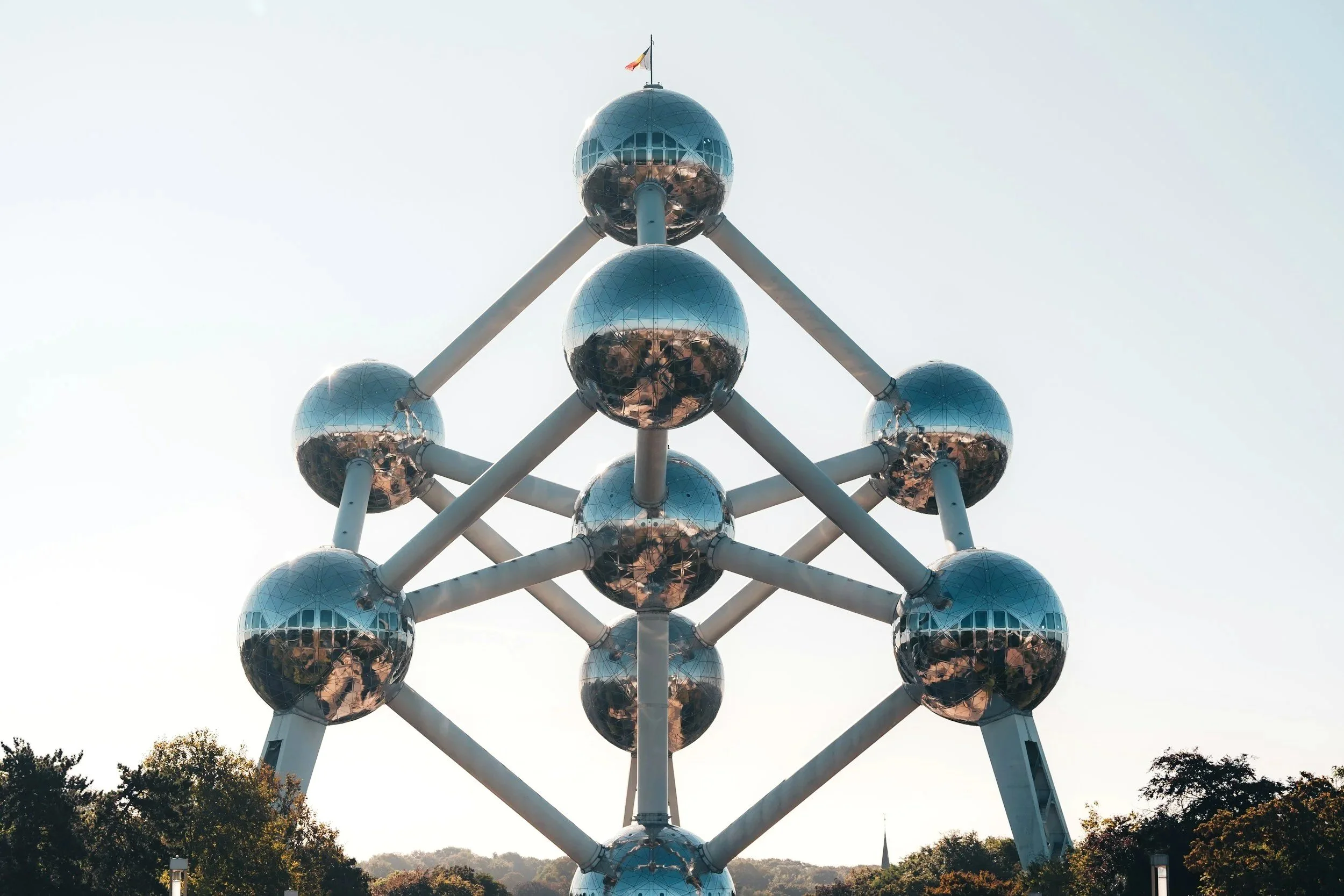
No Structure, No Marketing: The High Cost of Novelty Without Foundation
Real luxury isn't in surprising the client, but in eliminating their uncertainty.
In an industry obsessed with "riding the wave" of trends, we’ve forgotten that true exclusivity is built on predictability, not fireworks. From the foundational lessons of Kemmons Wilson to the complex human ecosystems of modern longevity, I explore why impeccable CEX requires more than just a CRM—it requires Strategic Architecture.
Is your brand promise a robust ecosystem or just cardboard scenery?
I recently read an interview with Kemmons Wilson, founder of Holiday Inn. While often studied as a mass-market success story, Wilson grasped a truth that today, in ultra-luxury, seems forgotten: real value isn't in surprising the client but eliminating their uncertainty.
I've worked on relaunching global brands that set the pace in the luxury industry; brands under constant pressure to "ride the wave," to be the trend week after week. It's exhausting stress. But whether you're a disruptor or not, clients seek something far more primal: a stay that's easy and pleasurable, where they feel heard and you anticipate their needs.
It sounds like a lot, but it's not. It's simply architecture.
The Client's Obstacle Course and the CRM Mirage
In strategy meetings, I repeat the same: anticipation requires a solid CRM and impeccable CEX (Customer Experience). Everyone nods, but then you see clients trapped in an inefficient "obstacle course" of processes.
Why? We've obsessed over external disruption while neglecting internal structure. We want fluid experiences, yet force clients through operational chaos that even the best staff can't fully compensate for.
The Commitment Myth and the Cost of Turnover
We hear "new generations lack commitment." I say: No. The issue is companies aren't committed to hospitality's foundation. If your staff turns over every six months, your business is expensive, very expensive. You're burning money every time someone learns the system and leaves due to burnout, poor training, or unsustainable workflows.
Gallup data shows global employee engagement has dropped to 20%. It’s a stark reminder that in any high-end project, the most sophisticated and complex layer of the architecture is always the human ecosystem. Without a structure that supports those who deliver the experience, even the most brilliant marketing remains a facade. We can't blame just the PESTLE (Political, Economic, Social, Technological, and Environmental factors)—it plays its part. But we mustn't fuel the problem from the micro level. Otherwise, marketing is just cardboard scenery.
Reliability as the Ultimate Luxury
True luxury hospitality isn't fireworks; it's invisible structure that works.
No training, no anticipation.
No rest, no active listening.
No system, no magic.
In high-end tourism, longevity and wellness, predictability is the greatest luxury. Clients "let go" because they trust a robust ecosystem.
No structure, no marketing.
I'm Marian Gomez, Fractional CMO, Strategic Consultant, and Founder of Marian Gomez Consulting.
I help Iconic Brands reclaim their essence, build it from scratch, or redesign it so brand promise and operations align. If you seek strategic architecture—not just fireworks—let's talk.
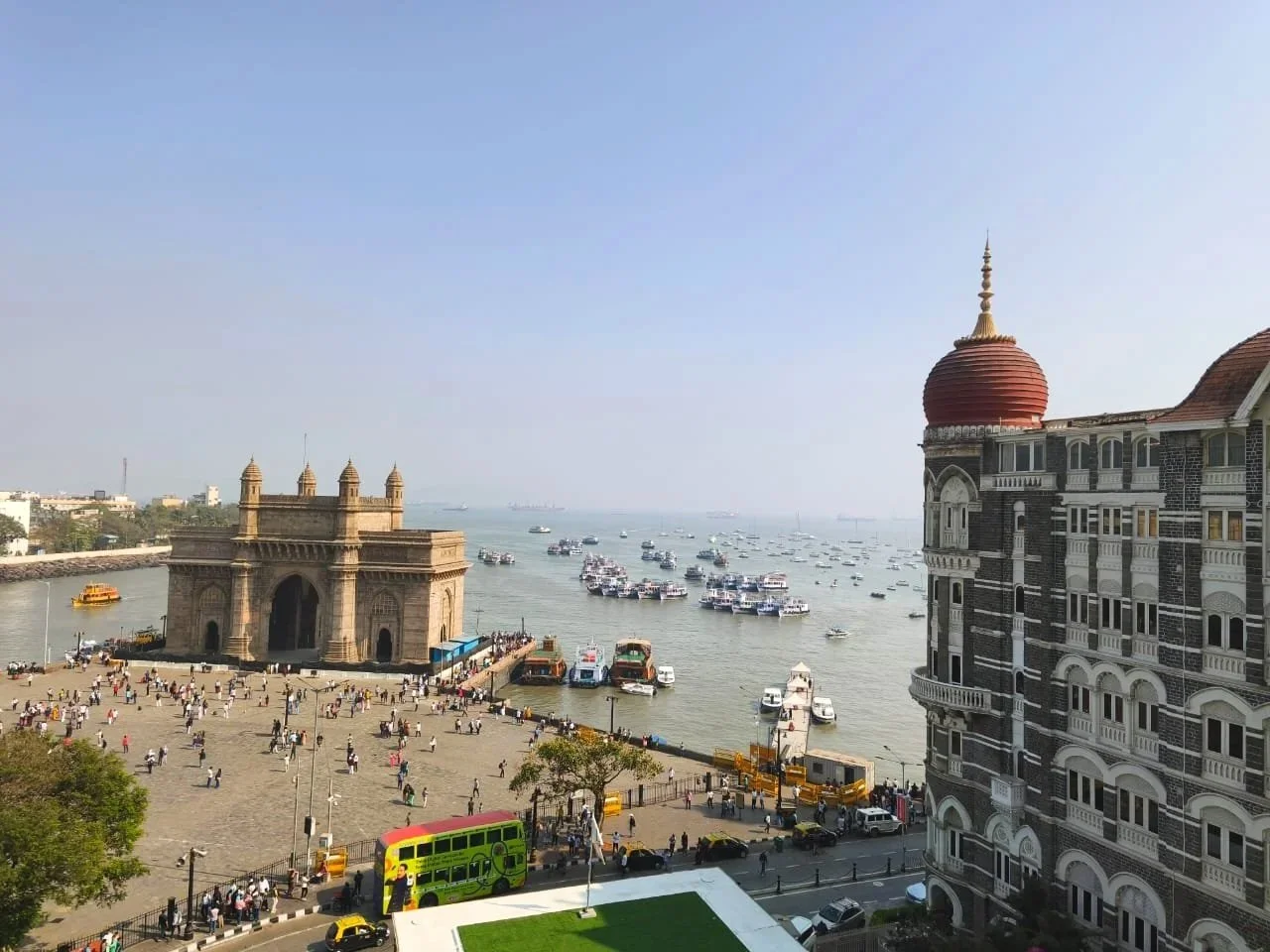
Seniority is Influence: Communication is the Ultimate C-Level Asset
Seniority is not about executing better; it’s about having the influence in the room to protect the strategy."
After nearly 20 years in the industry, I’ve realized that the biggest tax on a luxury brand isn't the competition—it's the internal "silos" and the cost of micromanagement.
From my time collaborating with UNESCO to a recent deep-dive at the Taj Mahal Palace in Mumbai, I analyze why "polishing your own piece of marble" is never enough to level the organizational ground. In the world of Luxury Hospitality and Wellness, if your storytelling doesn't protect your heritage, you're just another commodity.
Marian Gomez Consulting
Recently, while advising a VP of Marketing on building their executive team, a phrase came up that perfectly encapsulates the new standard of authority: "For me, seniority is influence in the room." At the C-Level, execution is no longer the differentiator; it is taken for granted. Real seniority is measured by the ability to protect the strategic function in a room filled with competing priorities, conflicting opinions, and, occasionally, personal whims.
The Strategic Filter and the "Canadian Newspaper"
There are anecdotes you never forget, and even after a decade, this one still makes me sweat. I remember a Global IT Director (not sales, not investors, not even the CEO… but IT) approaching me to suggest we run an ad in a tiny Canadian newspaper, one of those classified ads with only 20 words. My response was a battery of questions that every leader must be able to hold their ground on: Why that specific medium? To what end? Who is the audience, and does it truly align with ours?
Without that influence in the room to question such occurrences, brand strategy quickly dissolves into a collage of caprices. If the leader fails to act as a filter, the budget is diluted into ROI-less tactics. In luxury hospitality and wellness, this is lethal: every euro counts toward premium positioning.
The Identity Trap: Globalization vs. Heritage
Globalization brings us closer to a broader spectrum of cultures, but it carries a hidden risk: the loss of a brand’s soul. I recall a project during my university years in Belgium, collaborating with UNESCO. Carmen, a brilliant Mexican leader, was heading the strategy. I remember her frustration when I argued that uncontrolled globalization erodes cultural identity. Progress is necessary, yes, but preserving cultural heritage is what allows us to grow with unique identities and truly referential brands.
The Taj Mahal Palace is the ultimate reference of Indian heritage. In such an iconic setting, Ayurveda isn't just a "mandatory" spa service; it should be the undisputed star product. When a brand fails to own its storytelling and its cultural roots, it becomes just another luxury commodity. Strategic seniority means having the voice to say: "This is who we are, and we will not dilute it."
Autonomy as an Asset
I experienced this tension firsthand recently at the Taj Mahal Palace in Mumbai. On the surface, it is a marvel of operational autonomy: a decisive and graceful staff that remembers guest details masterfully. No one, even at the most basic level, waits for a "pat on the back" from their manager to make a decision, eliminating any potential bottlenecks. I’ve always held onto something one of my great industry mentors, Gonzalo Franyutti, used to say: "The worst kind of management is the one that never happens."
Nothing is more cost-effective for an owner than an autonomous team. But that autonomy requires leaders who flee from micromanagement. You cannot spend your time overseeing every comma, every image, the toner in the photocopiers, or the refills for the coffee machine. Micromanagement is not supervision; it is a tax on agility that stifles talent and paralyzes company growth.
To the Hospitality, Tourism & Wellness teams I train (cousins, but not identical twins, friends), I always say the same thing: "Don’t worry about making mistakes. I make them too. We aren't performing surgery; nobody dies." Fear is the ultimate financial bottleneck: it paralyzes execution and breeds burnout. However, without strategic communication to align that autonomy, the system eventually collapses.
The Trap of the Silent Marble
Even with excellent service, the Taj revealed pathological disconnections that weren’t just anecdotes. We saw a blind CRM, with marketing operating in its own silo, offering breakfasts that were already part of the contract. We encountered a "False Hammam": a hall of superb marble devoid of any real substance, where product and communication had never actually spoken to each other. Even the Spa Director, despite his expertise, ended up selling what the hotel wanted to push rather than what the client was looking to buy.
No one owned the complete experience. This isn't a failure of individuals; it’s an organizational design flaw. Departments don’t talk because the structure doesn’t require them to. The result is a silent chaos where every department speaks its own language, and the client is the one who ends up paying for the translation.
Leveling the Organizational Ground
Every company has its own Achilles' heel—often structural rather than marketing-related. True seniority is having the influence to level the ground: to say "no" to departmental inertia and "yes" to ecosystemic coherence. If every department only polishes its own piece of marble, the floor will never be level.
Execution earns credibility, but influence protects your leverage.
Final Note: After nearly 20 years in the industry and traveling for as long as I can remember, this is the first time I’ve genuinely wanted to return to a hotel solely for the service and the global experience, despite its strategic gaps (and their excessive AC! Hahaha). In the end, operational excellence is what brings you back, but strategy is what makes the business sustainable.
If you noticed a bit of silence here on February 15th and March 1st, it wasn't a CRM glitch. I was "watching the bulls from the sidelines," as we say in Spain. In the end, you can’t truly disconnect from what you drink, but you certainly breathe differently (with tranquility and without the tachycardia).
I’d love to know if "Canadian newspapers" ever land in your boardroom or if you’ve felt that urgent need to level the floor.
I help iconic brands in Luxury Hospitality, Tourism, and Wellness level their organizational ground and transform their marketing strategy into a coherent, agile ecosystem. If you're ready to turn influence into impact, let's talk at www.mariangomez.com
We are connected :)

Marketing Architecture vs. Tactical Execution: The Blind Spot in Longevity & Hospitality Investment
Most luxury hotel owners believe they have a marketing problem. They’re wrong. They have an architecture problem. Discover why burning budgets on "pretty content" is failing your P&L and how to restructure your marketing to protect asset valuation in the Longevity and Advanced Wellness sector.
Most luxury hotel owners believe they have a marketing problem. They’re wrong. What they have is an architecture problem.
I’ve audited enough assets to see a recurring pattern: properties burning six-figure budgets on social media agencies, content creators, and influencer campaigns. The Instagram metrics are glowing; the P&L, however, is not.
The result is inflated operational spend that fails to move RevPAR, stagnant direct bookings, and an asset valuation that doesn’t reflect its true potential.
The Gap Between Rigor and Superficiality
In the Longevity & Advanced Wellness sector, the error is systemic. You cannot sell high-precision health protocols using "beach resort" marketing tactics.
The Error (Tactics): Buying content calendars, "pretty" photos, and ad management.
The Solution (Architecture): Designing an infrastructure connected to the P&L, systems that convert awareness into qualified bookings, and a team built for accountability.
The 3 Pillars of Marketing Architecture
To scale, you don’t need more "likes." You need process engineering:
Process Audit: Identifying where the guest experience breaks from the first ad exposure to the final booking. Most luxury assets leak 60% of their leads due to a lack of conversion infrastructure.
Team Engineering: Structuring internal talent for efficiency, not volume. Defining who leads the strategy, who executes, and who verifies the scientific integrity of the communication.
Equity Protection: Ensuring every marketing dollar increases the property’s asset value, not just its engagement metrics.
The Fractional CMO Solution
This is where the traditional full-time Chief Marketing Officer model fails. Investment funds and independent owners don’t need a static executive settling into the organizational chart; they need agile, external leadership with an owner’s mindset.
A Fractional CMO steps in to audit with brutal honesty, detect capital leaks, and design the ecosystem required for the asset to scale without losing its essence. You aren't buying execution; you’re buying strategic design and the safeguard of your investment.
If you are an investor or owner, ask yourself three questions:
Can your marketing leadership explain how their work affects your asset valuation today?
Are they optimizing for Guest Lifetime Value or for vanity metrics?
Are they measuring qualified bookings or just impressions?
If the answers make you uncomfortable, you don’t have a budget problem. You have an architecture problem.
Marian Gomez is a Fractional CMO and Strategic Consultant. She helps funds and investors restructure marketing operations across Luxury Hospitality, Wellness, and Longevity assets.
Is your marketing spend failing to reflect in your business results? Let’s connect for a 30-minute diagnostic to identify where your capital is leaking.

Why Your Luxury Hotel Is Competing on Price (And Losing): The Framework That Changes Everything
Discover why competing on price is losing the luxury hotel market and learn a unique emotional positioning framework to command premium rates and stand out with unforgettable guest experiences.
Most luxury hotels think they're competing against other hotels. Wrong.
You're competing for emotional territory in your guest's mind, and most properties are fighting over the same cramped space while vast territories remain unclaimed.
The Common Marketing Mistake in Luxury Hotels
Walk into any luxury hotel marketing meeting, and you'll hear the same conversation:
"Our competitors dropped rates 15%."
"We have to match them or lose bookings."
"Let's push the spa and restaurant more."
If you're competing on price, you've already lost the positioning war.
After working with luxury hospitality brands across three continents, I've seen this pattern repeatedly: hotels with identical amenities, similar service levels, and comparable locations, yet one commands 40% higher rates with 85% occupancy while the other struggles to fill rooms. The difference? Strategic positioning.
The Competitive Positioning Framework: Four Steps to Premium Pricing Power
Step 1: Map the Emotional Landscape, Not Just the Physical
Most hotels map their competition geographically. Fatal mistake.
Your real competitors aren't the hotels within a 5-mile radius; they're any brand competing for the same emotional need your guest seeks to fulfill.
What does your guest truly seek beyond a bed?
Status and social currency?
Complete escape and transformation?
Deep cultural immersion?
Spiritual renewal?
Creative inspiration?
Business power positioning?
Study the masters:
Four Seasons owns "flawless service anticipation"
Aman owns "spiritual sanctuary"
One&Only owns "rare hideaway experiences"
Capella owns "curated cultural immersion"
Notice something? None of these brands compete on thread count or marble thickness. They've claimed distinct emotional territories.
The exercise: Create a positioning map plotting competitors on key emotional drivers. Where are the white spaces?
Step 2: Discover Your Irreplicable "Reason Why"
Every luxury brand needs an unassailable "reason why" they can deliver their emotional promise better than anyone else.
This isn't about what you do; it's about why you're uniquely qualified to do it.
Location alone isn't enough. Everyone has a view, a beach, or historic charm. The real differentiators:
Unreplicable heritage: The Gritti Palace's 500-year history as a Doge's residence
Founder philosophy: Aman's Adrian Zecha vision of creating sanctuaries, not hotels
Exclusive access: Necker Island's private island status
Proprietary methodology: COMO's wellness expertise from decades of innovation
Cultural authenticity: A ryokan family's 15-generation hospitality tradition
The test: Could a competitor with an unlimited budget replicate your "reason why" in five years? If yes, it's not defensible enough.
Step 3: Explore Untapped Emotional White Space
Most hotels cluster around the same 3-4 attributes: service, location, amenities, and design. They're fighting a battle for the same overcrowded territory.
Meanwhile, entire emotional landscapes remain unoccupied.
Untapped territories I've identified:
Intellectual stimulation: Hotels that make guests smarter (beyond basic cultural tours)
Creative catalyst: Spaces designed to unlock artistic inspiration
Wellness innovation: Beyond spa, hotels that genuinely transform health
Business amplification: Environments that enhance professional performance
Sustainable luxury: Guilt-free indulgence that makes a positive impact
Intergenerational bonding: Experiences that create lasting family connections
The opportunity: While competitors fight over "best service" and "stunning views," smart brands are claiming entirely new emotional territories.
Step 4: Build Your Defensive Moat
What some luxury hotels get wrong: They think good service and beautiful architecture are differentiators.
They're not. They're table stakes.
In luxury hospitality, impeccable service and stunning design aren't value-adds; they're minimum entry requirements. If you don't have them, you're simply not in the game. But having them doesn't win you the game either.
Similarly, running a Google Ads or Meta campaign is an important marketing action, but it is not your strategy. Without a clearly defined strategy, one that establishes your core values, emotional positioning, and unique promise, such campaigns are just noise. True market leadership comes from a well-crafted strategy that guides every marketing action toward a coherent and authentic brand experience.
The real moat lives in the experiential details:
HOW you deliver (not just what you deliver)
WHAT you anticipate (not just what you react to)
HOW you communicate (not just what you say)
It's not what you claim to offer; it's what guests feel you transmit.
Examples of real defensive moats:
Exclusive partnerships that create unique access
Proprietary rituals that guests expect only at your property
Signature experiences that become part of your brand DNA
Cultural connections that can't be replicated
The deeper the experiential moat, the higher the rates you can command.
The Real Result: Price Comparison Becomes Irrelevant
When you nail competitive positioning, something magical happens: price comparison becomes irrelevant.
Your guests don't evaluate you against competitors because competitors can't deliver your unique emotional promise. They either want YOU, or they settle for something else. Rate wars end. Premium pricing begins.
Case Study: How One Resort Increased ADR by 60%
A Caribbean resort I worked with was stuck competing with five similar properties on the same island. Same luxury level, same pristine beaches, same high-end amenities.
The problem: Generic "paradise" positioning led to constant rate pressure.
The solution: We discovered their unique "reason "why," the resort's marine biologist founder had created the region's most successful coral restoration program.
The new positioning: "Conservation luxury," where your stay directly contributes to healing the ocean.
The result:
ADR increased 60% within 18 months
Occupancy rose to 92% (from 67%)
Guest satisfaction scores reached all-time highs
Zero rate pressure from competitors (who couldn't replicate the conservation story)
Your Next Strategic Move
Stop competing on features everyone has. Start competing on emotional territory only you can own.
Ask yourself:
What emotional need do my best guests really come to fulfill?
What's my unassailable "reason why" I can deliver this better than anyone?
What competitive white space can I claim and defend?
What experiential details make my guests feel something they can't get elsewhere?
Remember: In luxury, guests don't buy hotels. They buy transformations, experiences, and feelings.
The question isn't whether you have marble bathrooms and Egyptian cotton sheets; everyone in luxury does.
This is stage 1 of my 5-part strategic methodology series that transforms marketing from a cost center to a profit driver. While I typically share articles on the 1st and 15th of each month, I'll be releasing each stage of this framework weekly over the next four weeks. Next week: Media Portfolio Architecture, how to allocate budget by customer journey moment, not just by channel. Want the complete framework overview? Link to the complete framework
_________________________________________
A strategic Chief Marketing Officer (CMO) designs and leads a growth ecosystem, continuously adapting strategy to market dynamics and business goals. For brands in luxury hospitality, tourism, and wellness, this leadership is essential to rise above the noise and build long-term value.
Marian Gomez Consulting
Fractional Chief Marketing Officer & Strategy Consultant
Boutique Strategy Agency | Hospitality, Tourism & Wellness Industry
www.mariangomez.com

The Art of Resilience for Leaders: Flourish in the Hospitality, Tourism and Wellness Industry
In the last decade, few industries have been as hard hit and transformed as hospitality, tourism, and wellness. This article explores how leaders in these sectors have not only survived but thrived by embracing resilience as a core competency and a strategic business approach. It highlights the pivotal roles of strategic marketing, the Fractional CMO model, and strategic consulting in enabling brands to adapt, innovate, and connect with their audience amidst constant change.
In the last decade, few industries have been as hard hit and transformed as hospitality, tourism, and wellness. From global pandemics to economic crises, natural disasters, technological changes, and transformations in consumer values, sector leaders have navigated more than turbulent waters.
And yet, here they remain. What's the key to their success? Reinventing, sustaining teams, redesigning experiences and, in many cases, emerging stronger. They have achieved this through a competency that is no longer optional: resilience.
Why is resilience a critical topic today?
Because the unexpected is no longer the exception. It's the norm. Economic volatility, climate change, destination saturation, regulatory pressure, new consumption habits and digital acceleration have redefined the context. And in this context, leading is not just about resisting. It's about anticipating, adapting and evolving with purpose.
For sector leaders, resilience is not just an emotional or personal matter: it's a business strategy. And like any strategy, it can be designed, activated and strengthened with the right tools.
Strategic Marketing: Pivot, purpose and positioning
A resilient brand is not improvised. It's built with strategic vision.
Having a clear, adaptable, and purpose-oriented marketing strategy allows companies to:
Reposition their value proposition in the face of new realities.
Communicate with empathy and forcefulness in times of crisis.
Recover customer trust and strengthen their community.
Identify differentiation opportunities in saturated markets.
Strategic marketing acts as a compass: it aligns operations with vision and emotionally connects with increasingly demanding customers.
Fractional CMO: Flexible leadership, external perspective, real results
In uncertain contexts, many brands cannot afford a full-time Chief Marketing Officer. But what they cannot afford is not having leadership in marketing.
This is where the role of the fractional CMO comes in: a strategic figure, with senior vision, who joins as part of the team without the structural weight of a permanent hire.
With more than 15 years of experience working with hospitality and tourism brands, I have seen firsthand how companies that maintain strategic leadership in marketing manage not only to survive crises but also to turn them into growth opportunities.
As a boutique strategic and digital marketing agency, our approach as fCMO is precisely that: we help brands get their heads above water, recover long-term vision, and activate opportunities that perhaps are not being seen from within. Without losing the pulse of day-to-day operations, but with strategic perspective and a complete team behind us.
Strategic Consulting: Diagnosis, design and action
When we work with hospitality, tourism or wellness brands, we start with a premise: resilience is also designed. And for that you need:
Diagnose blind spots in the value proposition, communication or experience.
Design contingency scenarios (because plan B is no longer optional).
Detect innovation opportunities: new products, services, audiences or channels.
Strengthen the employer brand and care for the internal team, because a resilient company needs sustained people.
Real cases of resilience in action
Boutique hotel in Bali that transformed its communication to attract local tourism when borders closed - result: maintained 70% occupancy during the pandemic.
Wellness center in Mexico that digitized its services and today combines in-person and online therapies - grew its client base by 40% in two years.
Resort in Ibiza that bet on real sustainability and managed to position itself in front of an increasingly conscious traveler - increased responsible tourism by 60%.
These are not miracles. They are strategies activated with intelligence, sensitivity, and focus.
What about the team? The heart of resilience
Resilience is also cultivated from within. A strong, aligned, and cared-for team is the first shield against any crisis. And that is also part of strategic marketing. Communicating purpose, reinforcing internal culture, activating a sense of belonging, and caring for the team's emotional health are fundamental to building a sustainable brand.
Is your brand ready to flourish in the storm?
Resilience is not enduring. It's leading with vision and purpose in the midst of change. If you lead a hospitality, tourism or wellness brand and feel that the time has come to not only resist, but transform and advance, we help you design that resilience strategy that your brand needs.
Our services as a boutique agency specialized in Fractional CMO and Strategic Marketing are designed specifically for brands that want to grow with intelligence, empathy, and impact in this sector.
Do you want to discover the key points that are holding back your brand's growth? We invite you to schedule a free Quick Scan. It's a personalized session where we will delve into your business's challenges and opportunities to understand how we can help you build a truly resilient marketing strategy.
Schedule the free Quick Scan at Marian Gomez Consulting

Do You Really Need a New Strategy… or Just More Focus?
There's a moment—sooner or later—in which every business starts to feel stuck. The website is done, your socials are active, you're creating content, the intention is there... but results aren't showing up. And so the question comes up: Do I need a strategy? But what if the problem isn't the lack of strategy—but the lack of focus?
There’s a moment—sooner or later—in which every business starts to feel stuck. The website is done, your socials are active, you’re creating content, the intention is there… but results aren’t showing up. And so the question comes up: Do I need a strategy?
But what if the problem isn’t the lack of strategy—but the lack of focus?
Strategy vs. Focus: Not The Same (Though Easily Confused)
“Strategy” has become a catch-all word. It’s used to justify a pause, to fill up a presentation, or to launch a new offer. But having a strategy doesn’t mean owning a nice-looking PDF full of buzzwords. A real strategy is a clear, intentional plan aligned with your business vision.
Focus, on the other hand, is what turns that strategy into consistent, meaningful action. It’s the filter that lets you say “yes” or “no” without second-guessing. Because a strategy without focus is like holding a map but not knowing which way you’re facing: you know where you want to go, but you’re not moving.
Signs You May Lack Strategy
Some red flags that point to the need for strategic clarity:
- No clear goals, or no idea how to measure them.
- Generic or inconsistent messaging.
- You're active on many channels, but none of them really work.
- You feel like you're constantly reacting, not intentionally deciding.
In this case, the best thing you can do is pause. Audit. Zoom out. Make structural decisions. And if your business already has momentum, this is where bringing in a fractional CMO can make all the difference.
Signs You May Lack Focus
Other times, the strategy is there but:
- You constantly change directions without letting ideas mature.
- You struggle to prioritize and end up half-executing many things.
- You feel overwhelmed by content, formats, platforms...
- You chase trends without asking if they fit your brand.
Here, you don’t need a new strategy. You need to simplify. Re-center. Create sustainable routines. And yes, a clear outside perspective can help immensely.
The Risk Of Confusing One For The Other
When we confuse a lack of focus with a lack of strategy, we fall into the trap of rebuilding everything every three months. A new website. A new claim. New services. New colours. But if the real problem was just not sticking to what you already had… you end up in an endless loop.
So here’s the question before redoing anything: “Do I really need a new strategy, or do I just need to hold my current one with more clarity and consistency?”
What Do You Need Right Now?
There’s no universal answer. But there is a way to figure it out: pause, observe, and assess. See your business as a system—not a to-do list.
That’s exactly what a fractional CMO does. I don’t come in to do more—I come in to help you do better. To co-create a strategy (if that’s what you need) or help you simplify and stick to the one you already have. Sometimes, it’s not about adding—it’s about letting go.
If you’ve been feeling like you’re doing all the things but still not moving… maybe you don’t need a new strategy. Maybe you just need focus. And if you’re not sure where to begin, I’m here to help you see it clearly.

Microniche Strategies in Tourism and Wellness: Differentiation Approaches that Transform Brands
The relentless homogenization of tourism and wellness experiences has created unexpected territories of distinction where true competitive advantage flourishes. As conventional brands pursue scale, visionary organizations are cultivating singular identities through strategic microniches that transcend traditional market positioning, attracting dedicated audiences seeking transformation rather than transaction.
The relentless homogenization of tourism and wellness experiences has created an unexpected opportunity: territories of distinction where true competitive advantage flourishes. As conventional brands pursue scale and standardization, a profound countermovement emerges. Microniche strategy transcends conventional positioning tactics to become a transformative philosophy that redefines possibilities for visionary brands in hospitality, tourism, and wellness.
The Contemporary Market Paradox: Mass Appeal versus Authenticity
The current tourism and wellness ecosystem presents a fundamental contradiction: while volume and standardization dominate conventional strategies, there simultaneously emerges a profound search for authenticity and experiential singularity. This tension creates precisely the space where hyperspecialized propositions can extraordinarily prosper.
My experience in the Balearic Islands revealed this phenomenon with meridian clarity. Destinations that once defined their identity through distinctive characteristics now face the challenge of experiential dissolution. In parallel, those brands that deliberately cultivated their singularity have transcended the limitations of seasonal cycles, achieving sustained demand based not on promotions, but on an inimitable value proposition.
This is not an isolated phenomenon, but a consistent pattern I have observed while advising projects in Spain, Mexico, and Indonesia: when an organization articulates its conceptual territory with precision, competition becomes essentially irrelevant.
The Strategic Architecture of Unique Voice in Tourism Marketing
The discovery of the appropriate microniche does not occur accidentally, but through a deliberate process of strategic exploration. True differentiation emerges from the intersection of three fundamental dimensions:
1. Resonant Authenticity: Effective hyperspecialization does not respond to passing trends, but emerges organically from the true essence of the organization. During my work with a boutique hotel holding company across different tourist destinations, the catalyst for their transformation was not the emulation of successful models, but the rediscovery of their intrinsic identity, revealing an unexplored territory where their voice resulted singularly authentic.
2. Conceptual Precision: Clarity consistently surpasses breadth. A wellness center on the Spanish Mediterranean coast multiplied its relevance when it refined its proposal to achieve a crystalline definition. Specificity, counterintuitively, expanded its appeal by transforming its identity from diffuse to indispensable for its defined segment.
3. Transformational Relevance: The most powerful microniches transcend functional characteristics to offer transformative possibilities. It is not simply about satisfying identified needs, but creating spaces where personal transformation becomes inevitable. This dimension radically elevates positioning, allowing brands to attract international clientele willing to traverse continents to access a singular proposition.
The Transformational Process: Revealing the Defining Microniche for Tourism Brands
The identification and development of the appropriate microniche does not constitute a superficial marketing exercise, but a profound process of strategic discovery that simultaneously requires organizational introspection and expansive contextual understanding.
This process begins with a rigorous assessment that transcends conventional analyses to explore non-evident intersections between organizational capabilities, authentic aspirations, and emerging market needs. The key does not reside in identifying obvious opportunities, but in revealing conceptual territories where organizational singularity can express itself with maximum potency.
Throughout my strategic collaborations, I have developed a methodology that facilitates precisely this exploration through the systematic elimination of conventional layers to reveal the differentiating essence. This approach allows brands to transcend superficial imitation to cultivate a unique voice that resonates with authenticity and precision in the competitive ecosystem.
Marketing Strategy as a Transformation Vehicle in Hospitality and Wellness
Effective marketing strategy in this context does not merely consist of message amplification, but the precise articulation of organizational singularity through each customer touchpoint. Communication becomes not an exercise in persuasion, but the consistent manifestation of a clearly defined identity.
This approach allows small and medium actors in the tourism and wellness sector to transcend budgetary limitations to establish distinctive presences that result magnetic for their specific audiences. Effectiveness does not derive from communication volume, but from its conceptual resonance and impeccable coherence.
The Transformative Horizon of Specialized Tourism Marketing
The tourism and wellness landscape finds itself at a moment of fundamental redefinition. Organizations that will prosper in this new paradigm will not necessarily be the largest or most established; in fact, many of them are experiencing upheaval and are redefining their brands through "rebranding" efforts and concentrating their proposition on models that approach more defined niches, with more bespoke propositions. Success will belong to those capable of identifying and articulating their microniche with surgical precision.
For marketing directors, CEOs, and visionary owners in the hospitality sector, the fundamental strategic question is not how to compete in established territories, but how to define proprietary spaces where competition becomes essentially irrelevant. The capacity to identify that singular space where the organizational voice can express itself with maximum authenticity and resonance constitutes the definitive competitive advantage in the contemporary tourism and wellness ecosystem.
The invitation is clear: transcend emulation to cultivate singularity. In a world saturated with interchangeable propositions, strategic differentiation does not simply represent an option, but the only sustainable trajectory toward organizational relevance and prosperity.
I invite you to explore how your organization might express its distinctive hospitality vision through a complimentary Strategic Tourism Marketing Session. This focused 30-minute virtual exploration—offered as a professional courtesy with absolutely no financial obligation—often reveals unexpected pathways for destination differentiation that remain invisible within conventional marketing frameworks.
Connect with me via email or LinkedIn to arrange your tourism marketing session. The most profound transformational journeys begin with a single moment of strategic clarity, and I welcome the opportunity to contribute to yours without any investment beyond your valuable time and perspective.