
Why Luxury Rebrands Fail Quietly
Luxury hospitality and longevity assets don't just need another marketing campaign; they need unshakeable brand DNA and precise strategic architecture. Discover how fractional leadership and strategic advisory transforms high-end properties, aligns operations, and scales global positioning for the ultra-luxury market.
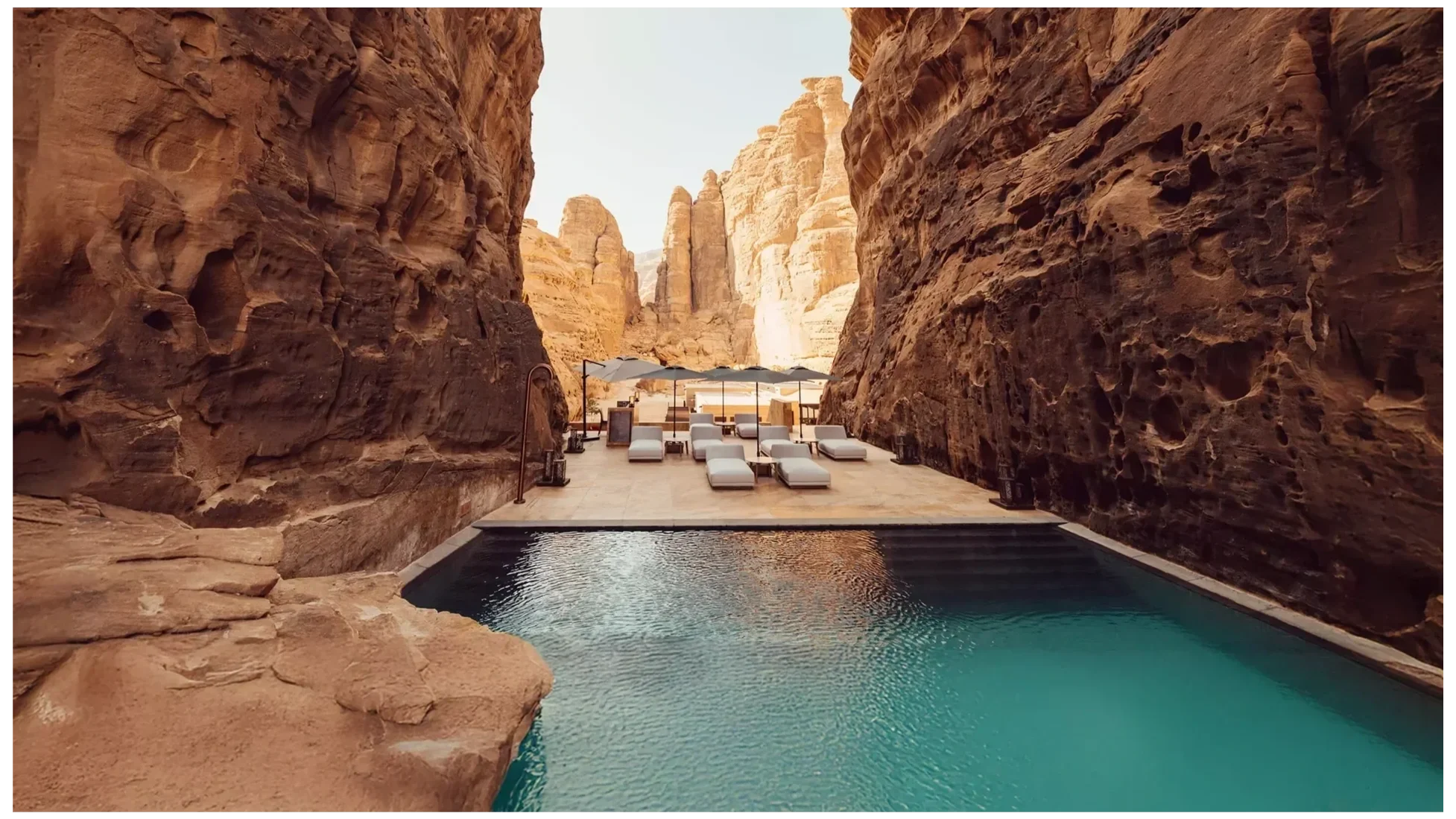
Visual architecture: Banyan Tree AlUla, Ashar Valley.
The distance between a commercial asset and an iconic brand is rarely a question of budget. It is conceptual coherence.
When I take on the strategic direction of a repositioning or the full conceptualization of a new project, the mandate is usually singular. Transform how the product is perceived. Elevate its narrative to global luxury standards. Build the internal structure capable of sustaining that growth without breaking under it. This is the terrain that work touches.
The symptom is clear. The cause, not always
When a client calls, in most cases they have already identified their pain points. Occupancy is not where it should be. ADR is not moving. The launch has not gained traction. The team is scattered. The brand never quite consolidated. Like someone reading their own symptoms, they research, try a few things on their own, attempt partial fixes.
Then there is another kind of call. Owners, investors, and leadership teams planning a launch, a relaunch, or an expansion. Here there is less pain and more strategic uncertainty. Open new properties. Enter new markets. Reposition an asset. What they need is a clear read on how to do it without putting the brand, the reputation, or the investment at risk.
In both cases, as in medicine, identifying the symptoms is only the first step. The precise diagnosis and the right treatment require another kind of look.
Most of the time, the question is not effort. It is capacity. Internal teams are not always built with the expertise or the time this specific work requires, and that is not a failure on their part. It is a question of expertise and time, not headcount. Companies bring me in to help their teams operate at this level. Not to become one of them.
A diffuse positioning. A confused brand architecture. An organizational structure that cannot hold the strategy. A narrative that does not connect with the right guest. The absence of a clear roadmap for a launch or expansion. An audiovisual identity quietly positioning the brand in the wrong direction.
It is not about having a videographer who shoots well. It is about whether the storytelling says the same thing across every channel, whether the message is diluted, or worse, whether it communicates something entirely different from what the brand is meant to be.
My role is not to execute what the client thinks they need. It is to make the correct diagnosis, identify the actual root cause, and design the parameters for a strategy that makes commercial and brand sense from there. That sometimes means not doing what the client asked for at first, but what the project actually requires to work over the long term.
In luxury hospitality, as in medicine, the value is never in prescribing quickly. It is in diagnosing correctly and designing the right treatment.
One ecosystem, not a menu of services
Repositioning a brand does not end with narrative. It has to convert. Paid campaign strategy, execution and optimization running in parallel across local and international markets, targeting the highest performing source markets for that category. High level strategic alliances that place the asset inside some of the most exclusive travel distribution networks in the world. Public relations coordinated with press agencies for the creation, oversight, and global distribution of materials. Every external vendor, from production companies to photographers, under direct creative supervision, because coherence at this level cannot be delegated without oversight.
Strategic Takeaway for Asset Managers: A rebrand that looks finished on the surface but has no unified oversight across paid media, PR, and content production will fragment within the first eighteen months. The fracture rarely shows up in the campaign. It shows up in the P&L.
None of it holds without the narrative and the identity behind it. Tone, copy, and target audience definition sit at the center of a repositioning, not as a slide in a deck, but as the filter every sentence has to pass through. The visual narrative carries equal weight. Shoot direction, framing, atmosphere, pacing, wardrobe. Strategy without a coherent visual language does not travel. It has to be built by the same hand, or the repositioning fractures at the first point of contact. Brand authorship and strategic coherence have to survive even when external agencies or internal teams later step in to execute. That is what Strategic Architecture™ and a disciplined approach to brand enhancement are built to protect.
Other projects start from an existing logo and need a full visual universe around it. An identity that changes depending on the platform is not an identity. It is a set of assets waiting to be unified. Both scenarios rest on the same brand architecture, paired with a strategy for collaborations and alliances built to survive contact with every channel without losing its core.
And none of it converts if the path a guest actually follows does not carry the same coherence. Every touchpoint gets weighed on its own terms: genuine user journey development from the first search to the confirmed booking, not just what a page looks like. What earns a place in the main menu, what moves to a secondary layer, and what does not survive the cut. Naming those sections carries equal weight. A label sets an expectation of what sits behind it, and a mismatch between the two erodes trust before a single price is shown.
Operational engineering, C-level advisory, and organizational structure
A repositioning does not hold if the internal structure behind it cannot sustain the same standard. This is where many luxury rebrands fail quietly, long after the campaign has launched. Workflow redesign and digitalization tools across departments come next. Then the Marketing, Sales, and Reservations organizational chart, rebuilt from the ground up. Talent acquisition and HR support, new professional profiles, a headhunting network activated for the right people. I set the standard and audit against it; I do not sit inside the org chart as headcount. At the top, C-level advisory covering global target audience definition and the annual marketing and commercial budgets that sustain the strategy over the long term.
How long this takes depends on the brand, its position, and its stage. Some transformations take twelve to twenty four months to become fully integrated. Others, with a mature leadership team already in place, close the gap in six months. Some commercial signals move within weeks—a paid campaign realigned, a booking path corrected, a stalled conversation with a distribution partner reopened. Those early wins matter, but they hold only if the architecture underneath is built to sustain them. Duration is a function of readiness, not ambition. What matters is whether the new standards hold under pressure and keep compounding value over time.
None of this is delivered as a document. There is no strategy handed over as a PDF, filed away, and left to the client to interpret. I stay through implementation, alongside the team to guide, until the standards are running on their own or the project has reached the ceiling of what that phase can hold.
If you are considering opening, relaunching, or positioning a luxury hospitality or wellness brand:
Founders, investors, and leadership teams inside a holding, group, or portfolio, in a pre-opening, relaunch, or repositioning phase, is where this work lives. Positioning and value proposition through target audience definition. Brand and experience architecture across rooms, F&B, memberships, rituals. Verbal and visual narrative rebuilt through brand enhancement and content creation. Marketing, sales, and bookings structure, roles, processes, team formation. Fractional CMO and Strategic Advisory connecting the C-level vision to tactical execution across paid media, PR, and luxury alliances.
I work directly with holdings, groups, and portfolios across hospitality and wellness, from my base in Bali with a strategic axis running through Europe. If it makes sense to talk through your project, you can reach me through my services page.
I am Marian Gómez, the Founder of Marian Gomez Consulting, a boutique strategic advisory for luxury hospitality, wellness, and tourism brands and holdings, based in Bali, advising clients across Asia, Europe, and the Americas. I publish around the 15th of each month in this blog, sometimes a few days earlier, sometimes later, and occasionally outside that cadence when something worth saying surfaces in the industry. What you will find here leans more didactic and deliberately deep, not written for general consumption, but for those who operate at the level where these distinctions matter. For more applied, day-to-day thinking and a slightly sharper sense of humor, find me at The Brand Architecture, a publication written for founders, investors, and leadership teams in luxury hospitality, with a strategic lens on wellness, travel, tourism, and longevity. Not about ideas, but about two decades of expertise in brand and marketing strategy across luxury hospitality, tourism, and wellness.
You can subscribe to The Brand Architecture directly on Substack. It is free, and it is the only way to receive new pieces as they publish.
The Difference Between an Opening and a Promise: What Luxury Hospitality Is Building Next
A strategic analysis evaluating the 2026–2027 luxury hospitality cycle through the divergence between property announcements and long-term asset performance. Grounded in institutional asset positioning, Marian Gómez (Founder, Marian Gomez Consulting) contrasts the Architectural Inheritance Thesis across European gateway cities (The Hoxton, Nobu, Experimental Group) against capital-intensive longevity ecosystems in Phuket and Saudi Arabia (Clinique La Prairie, Amaala). The paper further examines the critical rift between generative AI search visibility and true operational maturity (Meliá, Marriott, Barceló), delivering an indispensable diagnostic framework for owners, developers, and asset managers seeking to build defensible brand architecture.
This analysis evaluates the 2026-2027 luxury hospitality cycle, contrasting the "Architectural Inheritance" thesis with capital-intensive wellness ecosystems. Examining the divergence between AI visibility metrics and true enterprise operational maturity, offering a diagnostic lens for owners and investors navigating luxury hospitality strategy and asset positioning.
An opening is an announcement. A promise is capital committed, teams hired, and a building that now has to perform. Very few properties, and even fewer brands, manage to be both at once.
What follows is a reading of the openings, launches, and visibility signals shaping luxury hospitality through the remainder of 2026 and into 2027. Not for their press coverage. For what they reveal about the decisions behind them and about who is building the infrastructure to sustain those decisions over time. The Architectural Inheritance Thesis: Madrid and Porto Rewrite What Real Estate Value Means. Architectural inheritance, in luxury hospitality, means converting a building with historical character into brand equity, rather than constructing new. Across European gateway cities, that is now the dominant real estate thesis.
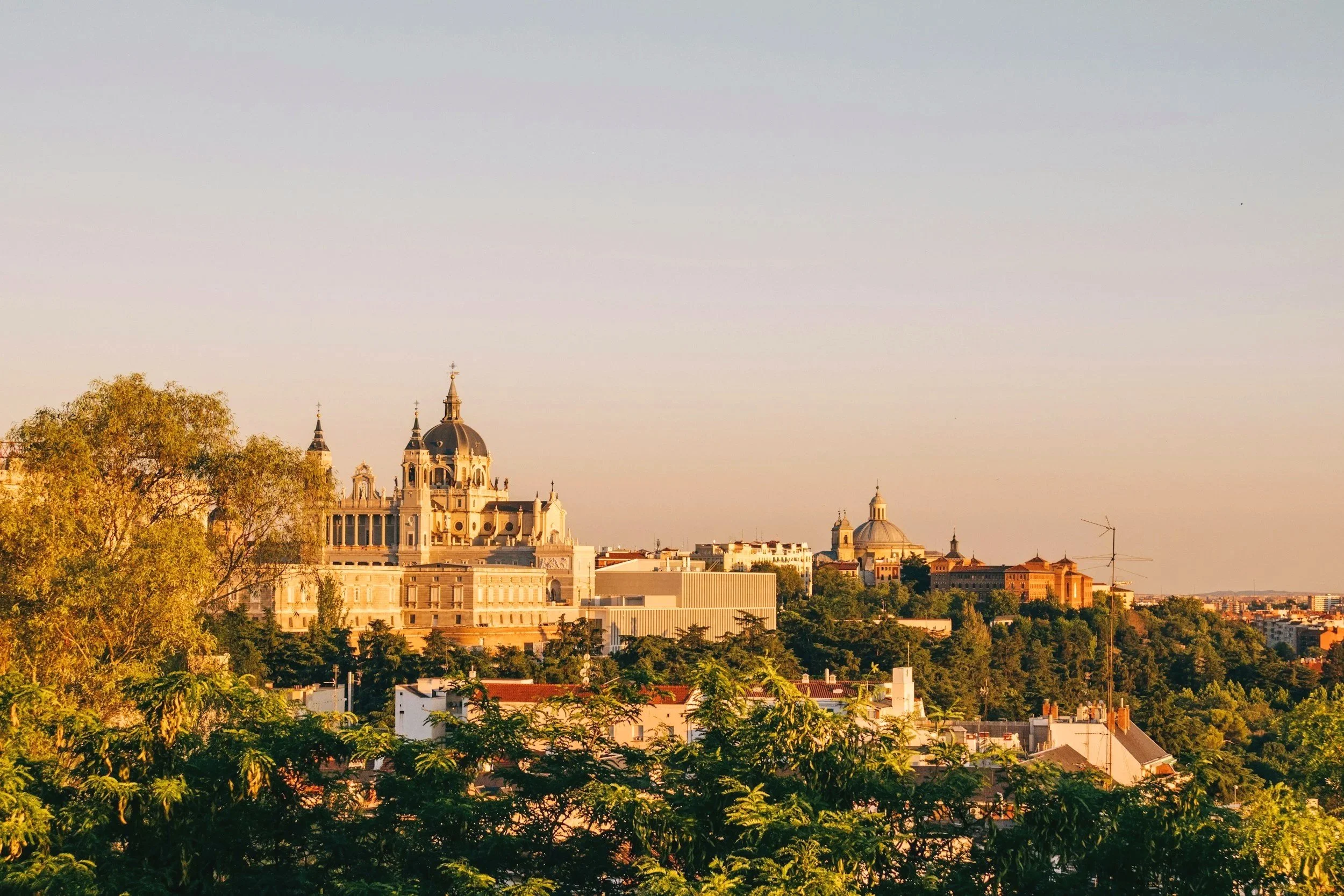
The Hoxton is coming to Madrid this year, taking over the building that once housed ME by Meliá on Plaza Santa Ana: a modernist façade with a history tied to bullfighters since the Belle Époque. Nobu Hotels is entering Madrid the same year, inside a former office building at Alcalá 26, between Cibeles and Puerta del Sol. In Porto, the Experimental Group takes its first step into Portugal through investor Extendam, acquiring the Infante Sagres, the city's first five star hotel, opened in 1951 and now guided by designer Dorothée Meilichzon.
Three lifestyle brands. Three European capitals of second momentum. Three buildings with history, reconverted. This is not coincidence. Value no longer lies only in building. It lies in inheriting architectural character and rewriting it under a brand with its own language.
I write this from Bali, and I recognize the same logic across the Mediterranean, from Ibiza to Mallorca, where legacy properties are undergoing the same rewriting of architectural character into brand language, often with far less discipline behind the transition.
Strategic Takeaway for Asset Managers: Two distinct lifestyle brands can occupy the same city in the same cycle and achieve radically different market positioning. The success factor is not just the asset conversion; it is the refusal to accept "beige-ification." Without a clear brand architecture, historic properties risk commodity status. The market implication is direct. Either a brand carries a defined identity, built with real intent behind it, or the property risks becoming exactly that: a property, without praise or glory. Four Seasons already proved this in Madrid, on Gran Vía, a few years ago.
Same City, Same Year, Different Reading
The interesting part is not that Madrid receives two lifestyle brands in the same year. It is that both start from the same city, the same moment, and arrive in different places.
The Hoxton preserves the gesture of the historic building and opens it to daily work, with a lounge designed to be occupied for hours and dedicated meeting spaces under The Apartment brand. Nobu builds from scratch inside an office shell, with a three level restaurant space and a rooftop, betting on signature design and the dining experience as its core.
Neither decision is superior. Each responds to a different reading of what Madrid needs at this moment. That reading, not the announcement, is what deserves attention. I am from Madrid, and what I see in my home city reinforces it as a place with class, personality, and a clear pull toward both culture and business tourism.
Legacy Trajectory Versus Capital-Intensive Ecosystem: Clinique La Prairie and Amaala
Clinique La Prairie opens in Tri Vananda, Phuket, in November 2026, with forty private villas and the CLP Method as its clinical foundation. Behind it stand seven decades of longevity protocol and a network connecting Montreux with Anji, in China, alongside urban Longevity Hubs in Beijing, Dubai, and Madrid. What opens in Phuket is the extension of a trajectory, not an experiment.
Amaala follows a different logic entirely. Red Sea Global has confirmed a 13.6 billion dollar investment in the first phase of a project years in the making before becoming visible. Nine resorts, each built around a distinct approach to wellness, are now beginning to open their doors. This is not a recent bet dressed up as urgency. It is a longevity and wellness destination that chose to build itself over time, and that is now beginning to show itself. As a follower of One&Only and Equinox, I read the positioning and targeting here as close to a professional benchmark for the category.
Operational Reality Check: What separates a true opening from a promise still on paper is not the capital announced. It is the operational discipline, the team quality, and the ability to adapt to a shifting geopolitical landscape once the doors are actually open. This is where firms built for structural work, not campaign work, become relevant.
Two models, both valid, and neither interchangeable. One extends a proprietary method with seventy years of proof behind it. The other manufactures an ecosystem at a scale most markets cannot replicate.
Visibility Versus Infrastructure: The Real AI Leadership Divide
The Vipnet360 study places Meliá, Marriott, and Barceló as the hotel groups with the highest visibility in responses generated by ChatGPT, Google AI Mode, and Google AI Overviews. Meliá leads the combined index at 19.3 percent, ahead of Marriott at 17.2 percent and Barceló at 16.2 percent.
I know these three organizations from the inside. Marriott and Barceló, as a former employee. Meliá, as a client. That vantage point changes how I read what it means to "lead" at this moment, because visibility in an AI response is only part of the story.
Meliá Hotels International has turned artificial intelligence into an operational capability, not only a guest-facing feature. The premise is clear: technology should not cool down service; it should produce a hospitality that is more agile, more efficient, and still human. That premise is one of the central challenges facing brands and teams today.
Meliá has become a sector pioneer in robotic process automation, with software robots executing repetitive tasks across finance, human resources, and administration. Its analytical models monitor energy and water consumption in real time and flag anomalies before they become operational failures. Booking data is cross-referenced to anticipate occupancy peaks and optimize shifts and purchasing. Meliá has approved a formal Policy for the Responsible Use of Artificial Intelligence, one of the few of its kind in the hotel sector, built to protect data privacy and regulatory ethics while requiring teams to keep exercising professional judgment rather than defaulting to automation—a discipline that matters most precisely in luxury, where mechanization is where errors tend to originate.
That is the difference between appearing in an AI response and having built the infrastructure to deserve it.
What This Means for Owners and Operators
None of these projects succeed on the strength of their announcement. Success will be decided by the operational architecture behind the brand: the team, the governance, and the capacity to adapt as geopolitical and consumer conditions shift under a property that has already opened its doors. This is not only marketing and strategic work. It is business growth work.
I am Marian Gómez, Founder of Marian Gomez Consulting, a boutique strategic advisory for luxury hospitality, wellness, and tourism brands and holdings, based in Bali, advising clients across Asia, Europe, and the Americas. Through our Strategic Architecture™ methodology, we build integrated brand ecosystems where brand, experience, operations, culture, narrative, and revenue function under one unified strategic vision. We don’t just design marketing strategy; we build the foundation that makes that strategy possible and stay through the implementation.
Find me at The Brand Architecture for deeper strategic lenses on the industry.
Marketing Architecture vs. Tactical Execution: The Blind Spot in Longevity & Hospitality Investment
Most luxury hotel owners believe they have a marketing problem. They’re wrong. They have an architecture problem. Discover why burning budgets on "pretty content" is failing your P&L and how to restructure your marketing to protect asset valuation in the Longevity and Advanced Wellness sector.
Most luxury hotel owners believe they have a marketing problem. They’re wrong. What they have is an architecture problem.
I’ve audited enough assets to see a recurring pattern: properties burning six-figure budgets on social media agencies, content creators, and influencer campaigns. The Instagram metrics are glowing; the P&L, however, is not.
The result is inflated operational spend that fails to move RevPAR, stagnant direct bookings, and an asset valuation that doesn’t reflect its true potential.
The Gap Between Rigor and Superficiality
In the Longevity & Advanced Wellness sector, the error is systemic. You cannot sell high-precision health protocols using "beach resort" marketing tactics.
The Error (Tactics): Buying content calendars, "pretty" photos, and ad management.
The Solution (Architecture): Designing an infrastructure connected to the P&L, systems that convert awareness into qualified bookings, and a team built for accountability.
The 3 Pillars of Marketing Architecture
To scale, you don’t need more "likes." You need process engineering:
Process Audit: Identifying where the guest experience breaks from the first ad exposure to the final booking. Most luxury assets leak 60% of their leads due to a lack of conversion infrastructure.
Team Engineering: Structuring internal talent for efficiency, not volume. Defining who leads the strategy, who executes, and who verifies the scientific integrity of the communication.
Equity Protection: Ensuring every marketing dollar increases the property’s asset value, not just its engagement metrics.
The Fractional CMO Solution
This is where the traditional full-time Chief Marketing Officer model fails. Investment funds and independent owners don’t need a static executive settling into the organizational chart; they need agile, external leadership with an owner’s mindset.
A Fractional CMO steps in to audit with brutal honesty, detect capital leaks, and design the ecosystem required for the asset to scale without losing its essence. You aren't buying execution; you’re buying strategic design and the safeguard of your investment.
If you are an investor or owner, ask yourself three questions:
Can your marketing leadership explain how their work affects your asset valuation today?
Are they optimizing for Guest Lifetime Value or for vanity metrics?
Are they measuring qualified bookings or just impressions?
If the answers make you uncomfortable, you don’t have a budget problem. You have an architecture problem.
Marian Gomez is a Fractional CMO and Strategic Consultant. She helps funds and investors restructure marketing operations across Luxury Hospitality, Wellness, and Longevity assets.
Is your marketing spend failing to reflect in your business results? Let’s connect for a 30-minute diagnostic to identify where your capital is leaking.